Gold has remained one of the most secure assets for traders and investors all over the world. Owing to the trends that we will encounter in the year 2026, it will become more important to know how precious metals trading works. You may be interested in diversifying your portfolio or want to trade in a volatile market; knowing the art of trade may make a great difference in determining how successful you can be. This is a complete guide covering all you should know concerning trading this precious commodity, including the basic trading strategies to advanced techniques that can enable you to earn steady returns in the ever-changing financial markets.
Understanding Gold Trading in 2026
The landscape of precious metals trading has changed drastically over the last few years. A combination of new technology, shifting economic policies, and global financial developments has opened up fresh avenues for traders at all levels. Going beyond the usual investment vehicles, this precious metal keeps offering a few distinct advantages, such as portfolio diversification, inflation hedging, and liquidity.
Trading the asset here refers to the act of buying and selling contracts or physical holdings to make a profit from price changes. Fast forward to 2026, and traders are equipped with a range of tools such as futures contracts, exchange-traded funds (ETFs), contracts for difference (CFDs), and digital platforms, which altogether make trading more accessible than ever.
With the digital revolution of the financial markets, access has been opened up to everyone; retail traders can trade alongside institutional investors. As a result, a more competitive arena has been formed where it is knowledge and strategy rather than the size of capital that counts.
Where Can You Trade Gold in 2026?
Gold can be traded through many different financial markets with varying levels of flexibility based on the type of trader you are and how much risk you're willing to take.
You can trade gold through:
- Spot gold through the forex market
- Gold futures contracts
- Gold CFDs
- Gold ETFs
- Physical gold investments
Out of all these methods, online gold trading platforms offer traders the greatest level of flexibility as they allow traders to speculate on price changes without needing to own physical gold. Although there are many advantages of trading gold via the forex market, including high liquidity and the ability to trade in both up and down markets. Many experienced traders will choose to trade gold in the forex market.
The choice of which online gold trading platform to use is critical because it can have a significant impact on the execution speed, spreads, and the overall trading experience a trader has.
Best Gold Trading Strategies for 2026
Traders who succeed depend on structured strategies instead of predicting market direction. Here are some top-notch gold trading strategies that will still be applicable in 2026.
Trend Following Strategy
Gold's price is frequently characterized by strong and prolonged trends. Traders spot the major trend using moving averages or trendlines and then take positions according to the trend. This technique is effective in times of a stable economy.
Breakout Trading Strategy
Gold's price movement is very sensitive to important financial news. Breakout tactics consist of taking positions when the price breaks through crucial resistance or support levels backed by significant volume. This is particularly useful during periods of high volatility.
Range Trading Strategy
Whenever the price of gold fluctuates in a defined range, traders will purchase at the support level and sell at the resistance level. This method is advantageous in times of low volatility in the market.
News-Based Trading Strategy
Gold reacts very much to economic news i.e., inflation statistics, the interest rate policy of the central bank, and international conflicts. Traders make profits from the sharp price changes that occur after major announcements.
Every strategy must be supported by strict risk management for long-term profitability.
Gold Trading for Beginners: Getting Started
To embark on trading precious metals, one has to start with a proper foundation-building. Without proper preparation, most people enter live trading with the intention of making superfluous losses.
Education First
Learn the basics of the market before you risk the actual capital. Know what moves prices, how various market sessions act, and what volatility depends on. There are plenty of sources on various free educational resources, webinars, and courses on the Internet.
Start With a Demo Account
The vast majority of respectable exchanges provide virtual funds in the form of demo accounts. These descriptions offer risk-free settings to exercise strategies, experiment with platform features, and acquire confidence. Demo trade for a few weeks or months and then move on to real money.
Develop a Trading Plan
An overall trading strategy will define your objectives, risk tolerance, your favorite strategies, and trade entry and exit rules. This report will act as your guide as you make consistent decisions and prevent trading on emotions.
Master Risk Management
Considering the importance of protecting your capital over maximizing profits is more crucial, particularly at the beginning of your trading career. Do not expose your account on any one trade to a large percentage. Apply stop-loss orders and have the right size of positions.
Keep a Trading Journal
Record all trades and the entry and exit points, the reasons for the trade, the emotions, and the results. Periodic review of journals would assist you in discovering the pattern of your decision-making and areas that require a better approach.
Start Small
Start small when switching to live trading. This strategy enables you to get a feel of what it is like to be in the market and how it feels without incurring huge financial losses. Start small, increase the position size with increased confidence and consistency.
Understanding Market Analysis
Trading effectiveness involves the examination of markets in terms of various perspectives. Integration of analysis types will give a more detailed view of conditions in the market.
Technical Analysis
It is a strategy that entails the examination of price charts and the application of indicators to predict future patterns. Some of the often-used tools are moving averages, relative strength index (RSI), Fibonacci retracements, and candlestick patterns. Technical analysis is useful in determining entry and exit points and market momentum.
Fundamental Analysis
Lengthening the period of trading success requires an understanding of the economic factors that affect the prices. Follow inflation rates, currency appreciation, interest rate policies, and geopolitics. These pillars are the motivation of big tendencies, and they provide the environment in which the price action takes place.
Sentiment Analysis
Market sentiment is the general mood of the traders and investors. Extremes in positivity or negativity are usually signs of changes. Market psychology is determined using sentiment indicators and exchange positioning data.
Best Time to Trade Gold
Gold traders need to time their trades properly since gold tends to perform best at certain times of the day.
The period of the day when you may find it easiest to trade Gold is when the London session is open or immediately before when the London Session overlaps with the New York Session.
Many traders also look for high volatility periods during major economic data releases, which give traders the greatest chance of being successful in trading Gold.
However, since there is a higher volatility risk associated with trading Gold at these times, traders will need to implement disciplined risk management practices to protect their capital.
Risk Management in Precious Metals Trading
No strategy can ever be victorious without suitable risk management. By protecting your capital, you will be able to stay in the market longer and also have the means to take advantage of future opportunities.
Position Sizing
Decide on appropriate position sizes according to the size of the account and the degree of risk you can tolerate. A well-known rule of thumb indicates that no more than 1-2% of your total account balance should be risked on any one trade. This cautious method enables you to live through losing inevitable streaks.
Stop-Loss Orders
Use stop-loss orders all the time to keep possible losses within limits. Set these orders to logical levels that are dictated by technical analysis instead of random percentages. Stop-losses will occasionally be triggered just before the prices turn around; therefore, it is better to accept such situations as unavoidable insurance costs.
Diversification
It is better not to put all your eggs in one basket by investing all your money in one trade or using only one strategy. A diversified portfolio that consists of different time frames, strategies, or even asset classes will have smoother equity curves and will carry less risk overall.
Emotional Control
Trading mistakes are often attributed to fear or greed. No matter what your recent results have been, continue to follow your trading plan. Winning streaks can create a feeling of overconfidence that can cause you to take on too much risk, and losing streaks can create a sense of uncertainty and cause you to miss out on good opportunities.
Common Mistakes to Avoid
This is because learning from the mistakes of others will speed up your growth and also secure your capital.
Overtrading
Excessive trading, in particular, bad setups, kills accounts with transaction costs and bad risk-reward ratios. It is not about quantity, but quality. Wait until you get high-probability setups that go with your strategy.
Ignoring Risk Management
Missing stop-loss or taking excessive risks on each trade ultimately results in large drawdowns. Regardless of the confidence that you have in a trade, there are always the right risk controls to take.
Chasing Losses
When trades have been lost, it is very tempting to take up big positions or more risky strategies to immediately recover the losses. Problems are usually aggravated by this revenge trading. Keep to your plan no matter the recent results.
Failure to engage in Continuous Learning.
Markets develop constantly. The same strategies that were successful in the past might not be effective. Take up continuous learning and keep abreast of the market trends, and use your experience to perfect your strategy.
Concluding Thoughts
Gold is still considered one of the most stable assets in today's trading. Being profitable in 2026 will rely more on how well you understand the market, your willingness to follow prepared strategies, and being disciplined rather than just guessing the prices. No matter if you are new to trading or have been doing it for years, your success will essentially be determined by how well you manage risks, plan your timing, and choose your strategy.
If you are looking for professional advice, knowledgeable analysis, and reliable assistance from the experts, contact us now and move forward with trusted gold trading decisions.
FAQs
1. Is gold trading profitable in 2026?
Absolutely, if we have the right strategy, the right timing, and proper risk management.
2. Where can you trade gold online?
Gold trading is possible via online trading platforms that provide forex and metals trading.
3. Is gold trading suitable for beginners?
Gold trading is friendly to beginners if one sees it as a learning and practice process.
4. What is the best time to trade gold?
The overlap of the London and New York sessions gives the best volatility.
5. Is gold more stable than silver?
In general, gold is less volatile than silver.
6. Can gold be traded daily?
Gold can be traded daily because of the high liquidity that makes this possible.
Related articles
 CommoditiesInveslo
Why Gold Rally Cools in 2026: Pullback or Trend Reversal?
Gold markets after a strong rally over the last couple of years are now 2026 showing signs of exhaustion. The prices that appeared as if they might keep increasing infinitely are being resisted now and the traders as well as the investors are left wondering what will happen next.
 CommoditiesInveslo
What are Soft Commodities & How can You Trade Them?
Soft commodities are a vital component of the global financial and trading system; however, many traders overlook their value.
 CommoditiesInveslo
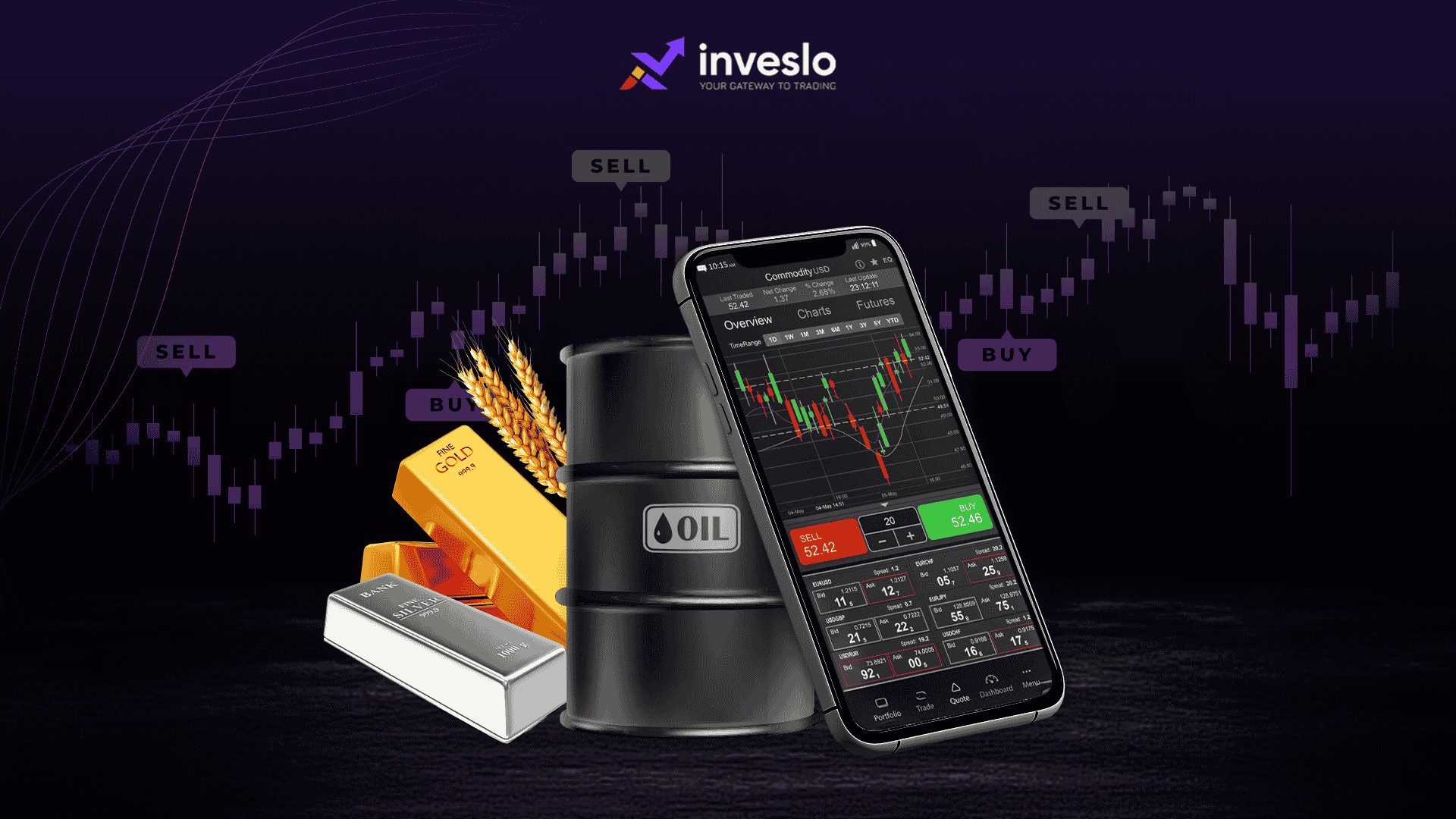
What is Commodity Trading in India? Strategies, Risks & Tips
Trading in commodities in India has turned into a quite advanced method for investors to diversify their investments besides the traditional stocks. One buys and sells raw materials such as gold, crude oil, cotton, etc., on the exchanges in the commodity market.