Crude oil is one of the most significant resources in the world affecting commerce, manufacturing, and people. Since the consumer’s demand for crude oil is in constant change following economic shifts such as geopolitical, technological, and market changes, traders look forward to making profits from such price changes. Crude oil futures marketing is perhaps one of the most effective ways of achieving this goal.
In this blog, all the basic information anyone needs to know about how to trade crude oil, including details of how it operates will be discussed as well as why the instrument is widely used in trading.
Understanding Crude Oil Futures Trading
Basically, crude oil futures trading is the business of speculating on the future price of a barrel of oil by actually purchasing a contract that will require the buyer to sell a particular quantity of poor at a defined price at some time in the future. These contracts are carefully structured and are engagingly traded at specific markets including the New York Mercantile Exchange (NYMEX) and Intercontinental Exchange Inc (ICE).
For instance, assume that a trader expects that the price of WTI crude oil will increase in the future then, they can buy one futures contract at the current price in the hope of reselling at a future date at a higher price. On the other hand, if they are futuristic of a lower price they can sell future contracts in the market to be able to buy them back at a cheaper price.
Futures trading gives a great chance to earn from increasing and decreasing oil prices, that is why this opportunity attracts speculative traders, investors, and organizations that use oil products.
Key Concepts in Crude Oil Futures Trading
Here, in this section, we will explain the basics of crude oil futures trading as the basis for the subsequent discussion of strategies and practical examples. By critically mastering the above-presented ideas, you will be capable of comprehending the features of the oil market and making the correct decision in trading the oil.
Crude Oil Futures Contract
A crude oil futures contract is essentially an agreement between two parties that obligate the buyer to purchase, and the seller to deliver, a fixed amount of crude oil at a predetermined price at some time in the future. This is because contracts as to quantity (1,000 barrels per contract) and delivery points are uniform and therefore traders rely on fluctuations in price as opposed to the technicalities of the contract.
Margin Trading
While crude oil futures do not require direct payment in full for an asset, thus making it easier for traders to gain control of the asset, you are allowed to use margin unlike in stock purchases where you pay the full amount upfront. This implies that out of every one percent of the Spot contacts value you have to put down only 0.5 – 1% to open a position. Still, the use of margins escalates both profits and losses, therefore, the a need to manage risks effectively.
Expiration Date
Like other contracts for trading, futures contracts have a delivery date when the trade must be done. It is the date by which the buyer needs to take delivery of the oil or the seller needs to make it, or the contract can be branded or rolled forward to avoid delivery of the physical product.
Crude Oil Price Forecast
A crucial component that defines crude oil futures as an object of trading is the capability to analyze and forecast the crude oil price. Costs are impacted by global trends, availability of raw materials, conflicts, disasters, and sometimes even general market trends. Technical and fundamental analysis is used by many traders to pull off the tricks of predicting the prices in the market.
How Crude Oil Futures Work
Now, let’s try to see what a simple example of crude oil futures contracts looks like while in the market. For this illustration, let’s assume that the current world price of crude oil is $ 80 per barrel. Do you think that global political unrest in one of the world’s leading oil-producing nations will cause prices to rise in the next one-month period? Dr. Howard then wants to buy one crude oil futures contract in one month, which means that he is guaranteed today’s price.
If by the time you need to sell the contract the price goes up to $85 per barrel, you can sell the contract and earn the difference of $5 per barrel. Because one contract equals 1000 barrels, the total profit would come to a figure of $5000 before the fees are considered. If the price falls instead, you could also start to post losses.
Crude oil futures trading is explained by the possibility of speculation as well as hedging provisions. The most notable users of the oil futures are industries that depend on oil as a raw material and require certainty of the prices to forecast their budget spend; the most common being airlines and the shipping industries.
Why Trade Crude Oil Futures?
There are several compelling reasons why traders and investors are drawn to crude oil futures trading:
- High Liquidity: The crude oil market is one of the most liquid in the world, meaning you can easily enter and exit positions without significant price slippage.
- Leverage: As mentioned, futures trading allows you to control large positions with a relatively small amount of capital through margin trading. This leverage can lead to substantial gains, though it also increases the risk of losses.
- Speculation and Hedging: Crude oil futures are popular among both speculators looking to profit from price fluctuations and commercial entities that need to hedge against oil price changes.
- Profit in Rising or Falling Markets: Whether the price of crude oil is going up or down, traders can make money by either buying or selling futures contracts. This makes it an attractive option for those who can accurately predict market trends.
Factors Influencing Crude Oil Futures Prices
Before delving into how to trade in crude oil futures contracts, there is a need to know what determines the price of oil. These include:
- Supply and Demand: Crude oil prices depend on the global supply and demand for oil. Other determinants include factors such as economic development, modification in energy utilization, and rates of production of oil-creating nations.
- Geopolitical Events: Crude oil can be said to be a politically sensitive item. Disruptions in major oil-producing countries (like those in the Middle East) lead to flare-ups of conflict and therefore cause supply problems leading to high prices.
- OPEC Decisions: The Organization of the Petroleum Exporting Countries (OPEC) has the central function of regulating world oil output. Reducing or even increasing the production rate has a way of affecting the price of crude oil rates.
- Natural Disasters: Natural calamities such as hurricanes, earthquakes et cetera that target principal oil manufacturing areas or means of transport influence supply and cause shifts in prices.
- Technological Advances: The introduction of new technology in drilling, especially in hydraulic fracturing (fracking), has affected the supply side of the crude oil markets and has exercised influence over the prices.
Crude Oil Trading Strategies
Trading in crude oil futures goes beyond the fluctuations in price; it needs a good trading plan. Some of the most popular crude oil trading strategies include:
- Trend Trading: It is a play of statistics whereby previous prices are looked at and a stab is made at future prices based on some current prices. Some of the technical tools employed by the traders in the market are moving averages which are instrumental in recognizing upward or downward trends.
- Range Trading: Other traders extend their efforts and try to look for support areas and resistance levels within the market and then only trade within that particular range. This is especially to be of benefit during a period of little price range changes with crude oil prices being relatively quiet.
- Breakout Trading: They think that a trend has started as soon as the price of crude oil shifts up and beyond the existing trading range or comes down from it. It is most effective to apply in volatile markets This strategy makes sense, particularly in a volatile market because.
Risks of Crude Oil Futures Trading
While crude oil futures offer significant profit potential, they come with inherent risks:
- Volatility: Crude oil is one of the most volatile commodities in the market. Price swings can be substantial, and leverage can amplify both gains and losses.
- Margin Calls: If the market moves against your position, you may be required to deposit additional funds to maintain your margin. Failure to do so can result in your position being liquidated at a loss.
- Market Timing: Successfully predicting crude oil price movements requires excellent timing. The market is influenced by a complex interplay of factors, and even experienced traders can be caught off guard.
- Regulatory Risks: Changes in government regulations affecting oil production, transportation, or consumption can lead to unexpected price movements.
How to Trade Crude Oil
If you're interested in getting started with crude oil trading, here are some steps to consider:
- Choose a Broker: To trade crude oil futures, you have to join a broker that deals in futures trading accounts. They should offer competitive margin rates as well as the right level of access to the exchanges.
- Study the Market: Learn about factors that may affect crude oil prices around the world. This requires tracking of accurate crude oil price predictions and the market report.
- Develop a Strategy: Like any kind of trading signal it waits for quantity and quality of successful operations to bring profit. It is important to have a plan that will coincide with your own risk tolerance and desired financial situation.
- Practice with Demo Trading: To gain a feel of live markets, practice trading on crude oil futures using a demo account. It enables you to get to know how the market operates without the use of real currency or cash.
- Monitor Positions: After opening a position, manage your positions very carefully because the market of crude oil fluctuates a great deal.
Final Thoughts
Crude oil futures trading is without a doubt a very volatile and potentially very profitable avenue to engage in, especially for those who can understand the workings of the oil price drivers. Again, whether you want to protect yourself from the changes such as an increase in the price of fuel or make a bet on the shifts in the market, crude oil futures provide an opportunity to invest in one of the most crucial markets in the world. Taking efforts much further and striving to comprehend such threats you will be in a position to benefit from fluctuation in the price of crude oil.
Be alert to the latest in the markets of crude oil and keep on practising to be an effective trader in the fluid market.
Related articles
 CommoditiesInveslo
Why Gold Rally Cools in 2026: Pullback or Trend Reversal?
Gold markets after a strong rally over the last couple of years are now 2026 showing signs of exhaustion. The prices that appeared as if they might keep increasing infinitely are being resisted now and the traders as well as the investors are left wondering what will happen next.
 CommoditiesInveslo
What are Soft Commodities & How can You Trade Them?
Soft commodities are a vital component of the global financial and trading system; however, many traders overlook their value.
 CommoditiesInveslo
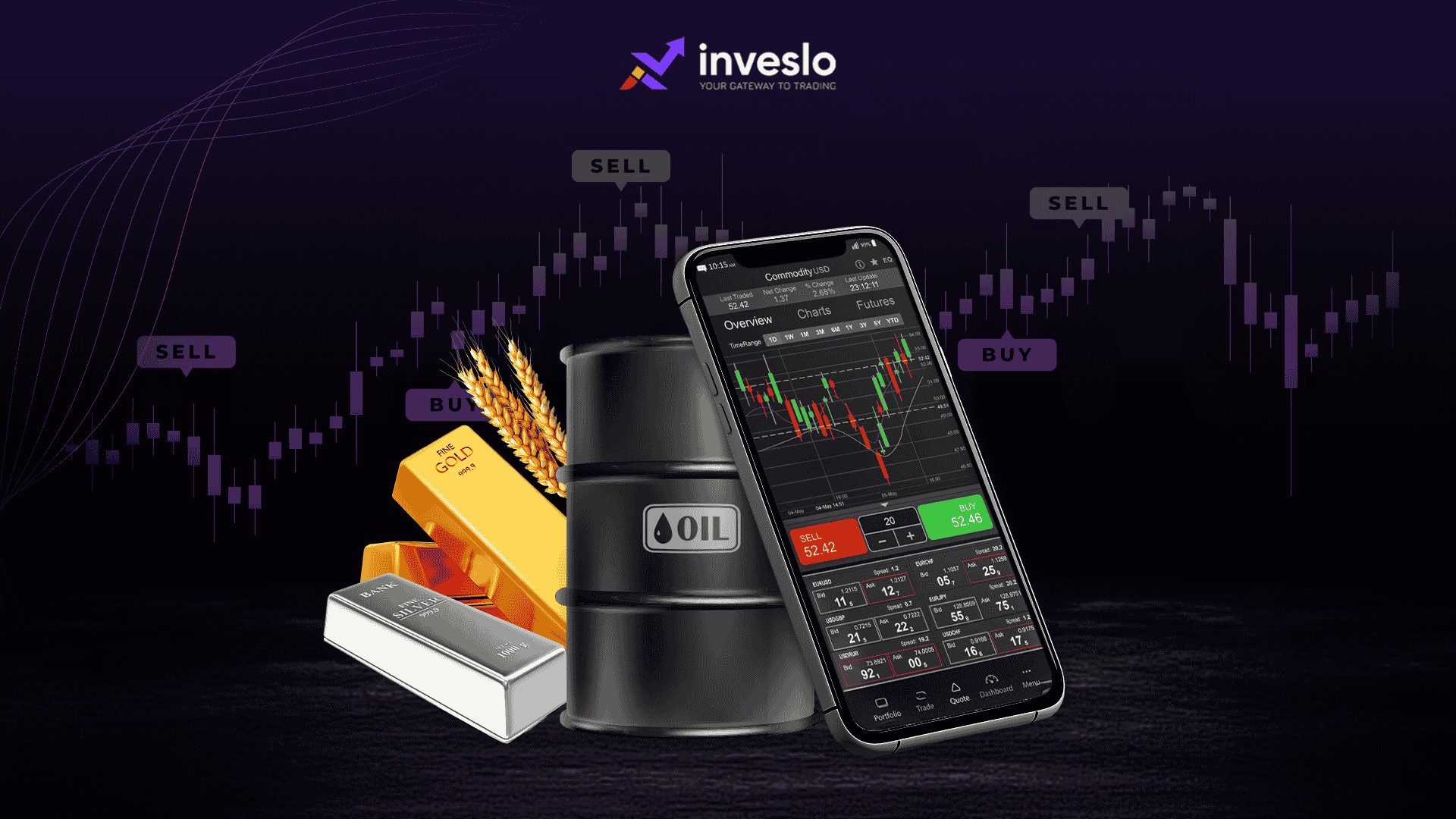
What is Commodity Trading in India? Strategies, Risks & Tips
Trading in commodities in India has turned into a quite advanced method for investors to diversify their investments besides the traditional stocks. One buys and sells raw materials such as gold, crude oil, cotton, etc., on the exchanges in the commodity market.