The Foreign Exchange Market (i.e., Forex or FX) is one of the largest, most liquid, and most volatile global financial markets, attracting millions of traders each day. However, success in foreign exchange does not only rely on knowing the market and having a winning strategy; there are also significant costs involved with trade execution. One of those costs is known as the "spread", which is how much you will pay to trade Forex. Being aware of the spread in forex and how it may affect profitability is key to your success as a forex trader.
Perhaps the most important benefit of low spreads is that they will allow you to execute trades at a lower cost, resulting in more profitable trades over time. Whether you are new to trading or an experienced forex trader, working with a low spread forex broker will dramatically improve your trading results and success as a trader over the long term.
What is a Spread in Forex?
One of the most important things for traders to understand before getting into low spreads is to look at spreads in general in forex. Forex spread is basically the difference between the bid price (the price at which you can sell) and the ask price (the price at which you can buy) of a currency pair. It is basically the cost of getting into a trade.
For instance, if the EUR/USD bid price is 1.1000 and the ask price is 1.1002, the spread is 2 pips. It is through this 2 pips that the trader starts the trade with a little loss, as the cost of execution will have been taken. The brokers in forex trading usually make their money through spreads rather than charging direct commissions in many cases.
The size of spreads is subject to changes based on the state of the market, liquidity, and the kind of broker. Currency pairs in the major group such as EUR/USD, for example, typically have very low spreads. On the other hand, exotic pairs are usually associated with high spreads due to the lack of volume in the market.
Types of Spreads in Forex Trading
Forex markets have two major types of spreads that traders are exposed to.
Fixed Spreads
Fixed spreads are fixed in spite of market volatility. Market maker brokers are associated with them. Although they are predictable, they can be slightly higher than variable spreads when there is a calm market environment.
Variable or Floating Spreads
The variable spreads vary depending on the market liquidity and volatility. When there is an overlap of the London or New York sessions during high liquidity periods, the spreads are very low. But in the case of big news, spreads can become very large.
Knowing these differences will assist traders in selecting a trading style that can fit them in terms of risk-taking.
How to Calculate Spread in Forex
To calculate the spread, subtract the bid price from the ask price. Generally, this difference is shown in pips, which represent the smallest price changes in foreign exchange markets.
For example, if the bid price for the GBP/USD pair is 1.2500 and the ask is 1.2503, then the difference (spread) will be 0.0003 (or 3 pips).
Multiply the number of pips (3) in the spread by the size of your position to determine how much you’ll have to pay to trade the spread. If you were to execute a 3-pip trade using a position size of 1 standard lot (a total of 100,000 units) where each pip is worth $10, the total cost for trading these 3 pips would be $30 per trade. A trader executing this same trade 100 times during the month would incur a total spread cost of $3,000, clearly showing why a trader needs to select a low spread broker when involved in active trading.
Why Low Spreads Matter in Forex Trading?
Low spreads are an important element in the profitability of traders for a number of reasons.
Lower Trading Costs
All trades entail the payment of the spread. The smaller the spread, the less money that traders lose to transaction costs. This is particularly necessary for busy traders who make numerous trades every day.
Scalpers Have a Better Profit Potential
Scalping is a trade policy in which traders wish to earn a little profit as a result of minute fluctuations in prices. Such small gains can be wiped out by high spreads, and scalping is almost impossible. Scalpers are able to trade well and predictably with low spreads.
Faster Break-Even Point
Under high spreads, a trade has to move quite a long way in the trader's favor to even break even. Low spreads minimize this distance, and it becomes easier to achieve profitability.
Better Overtime Performance
Low spreads can still make overall results positive even when a trader wins only 55 percent of his/her trades. Large spreads, on the other hand, can convert a winning strategy to a losing strategy.
Choosing a Low Spread Forex Broker
Choosing a low spread forex broker is a key move that can have a significant impact on your trading. Different brokers have different pricing structures, speed of execution, and level of transparency.
A good broker should have narrow spreads, fast order execution, and be well-regulated. Traders can also look into whether a broker provides pricing transparency, low slippage, and has a reliable trading infrastructure.
Besides, it's quite necessary to compare the spreads between various types of accounts since some brokers give the option of raw spread accounts with a little commission, which can be more economical for the traders who trade more frequently.
How to Trade Forex with Low Spreads Effectively
Availability of low spreads is only an advantage when applied in a prudent manner. The following are realistic ways of making this a benefit:
- Select the Right Currency Pairs: Traditional pairs such as EUR/USD, GBP/USD, and USD/JPY normally have the lowest spreads as a result of large liquidity. Exotic pairs are spread wider with the ability to neutralize the advantage of a low-spread broker.
- Trading at the busiest liquidity intervals: When London and New York sessions overlap, the spreads narrow the most when the market is the busiest. When the spreads increase by default, do not trade in thin markets.
- Adopt Scalping Strategies: Low spreads make short-term strategies effective. Small price movements can also be profitable to capture with minimal spread costs, whereas this is not open to traders who encounter high spreads.
- Optimize Position Sizing: When transaction costs are low, it is possible to trade more frequently without a resultant large accumulation of costs. Through this flexibility, there is more efficient capital deployment in various opportunities.
- Use of Technology: Incorporating the use of advanced platforms ensures you locate the best points of entry where the spreads are most favorable and therefore enjoy maximum cost advantage on each trade.
To beginners in the field of forex trading, low spreads offer a more lenient learning experience where errors do not compound with the high expenses.
Role of Trading Platforms in Managing Spreads
Traders depend on you, the trader relies on the underlying trustworthiness of the MetaTrader 5 trading platform, to help them monitor their trades as well as the spreads associated with them. The MT5 trading platform allows the trader to easily identify both bid and ask prices and view how the spread has changed within a given market session.
By having access to advanced charting tools, depth-of-market data, and automated trading software, traders can maximize efficiency and minimize the cost of executing each trade.
Importance of Low Spreads for Forex Trading for Beginners
When it comes to forex trading for beginners, low spreads are very advantageous. Since new traders are prone to errors, high transaction costs may turn the learning process into a higher, priced one.
Beginning with low spreads, beginners can concentrate on strategy development rather than on the burden of huge transaction fees. Besides, it gives a trader more confidence and helps in establishing a trading discipline.
Spreads and Your Trading Account
The kind of trading account you use can have a great influence on the spreads that you pay. The price of standard accounts is usually charged with a larger spread, and professional or raw accounts have much smaller spreads.
The traders are expected to select a trading account that suits their trading style, capital, and experience level. An organized trading account has the potential of lowering the overall cost and enhance profitability.
Market Liquidity and Spread Behavior
Spreads have a direct relationship with market liquidity. For instance, when the London and New York sessions overlap, which are highly liquid sessions, spreads usually reach very low levels.
But, in case of holidays, late-night sessions, or in the event of major economic announcements, spreads might increase drastically. Hence, traders need to be alert about these situations so as not incur unexpected expenses.
Low Spreads and Long-Term Trading Success
Over time, small differences in spreads can add up to thousands of dollars in savings. Even reducing the average spread by 1 pip per trade can make a huge difference for active traders.
This is why professional traders prioritize low-cost trading environments and carefully choose their broker.
Final Verdict
Low spreads in forex trading are more than just a minor issue; they are one of the essential elements of profitable trading. The disparity between high and low spreads can be worth thousands of dollars a year, which will ultimately determine whether your trading activity will generate profits consistently or if your account will be slowly depleted because of the accumulated costs.
Knowing what spreads are, how to figure them out, and why they are important will allow you to choose a broker intelligently so that the latter will be a means to achieving your trading goals and not a hindrance. Regardless of whether you are a scalper or a long-term trader, the efficiency of the spread will have an influence on each of your trades.
Do you want to gain the edge of genuinely competitive spreads? Contact our customer service representatives and find out how trading with 0.1 pip spreads and safe, regulated, trustworthy environments can not only ramp up your trading performance but also allow you to keep more of your market winnings.
Risk Warning: Trading Involves Risk. Manage Capital Wisely.
FAQs
1. What is a forex spread?
The forex spread measures the price difference between buying and selling a currency pair.
2. Why are low spreads important?
Low spreads decrease trading expenses, which lets traders make more money through their trades.
3. When are spreads the lowest?
The market experiences its lowest spreads during high liquidity times, which occur between the London and New York trading sessions.
4. Are fixed spreads better than variable spreads?
The answer depends on market conditions because variable spreads tend to decrease below fixed spreads during standard market times.
5. Do all brokers offer low spreads?
The answer is no because different brokers and account types provide different spread options.
6. Can beginners trade with low spreads?
Low spreads provide beginners with the best forex trading experience because they make trading easier for them.
Related articles
 ForexInveslo
What is the Consumer Price Index (CPI)?
The Consumer Price Index (CPI) tracks the average change over time in prices consumers pay for a representative basket of goods and services. It is one of the main measures used to monitor consumer inflation.
 ForexInveslo
What is a Trading Journal & How Do Traders Use It?
A trader can remember a big winner for months and forget three poorly planned trades from the same week. That is one reason relying on memory makes trade review difficult.
 ForexInveslo
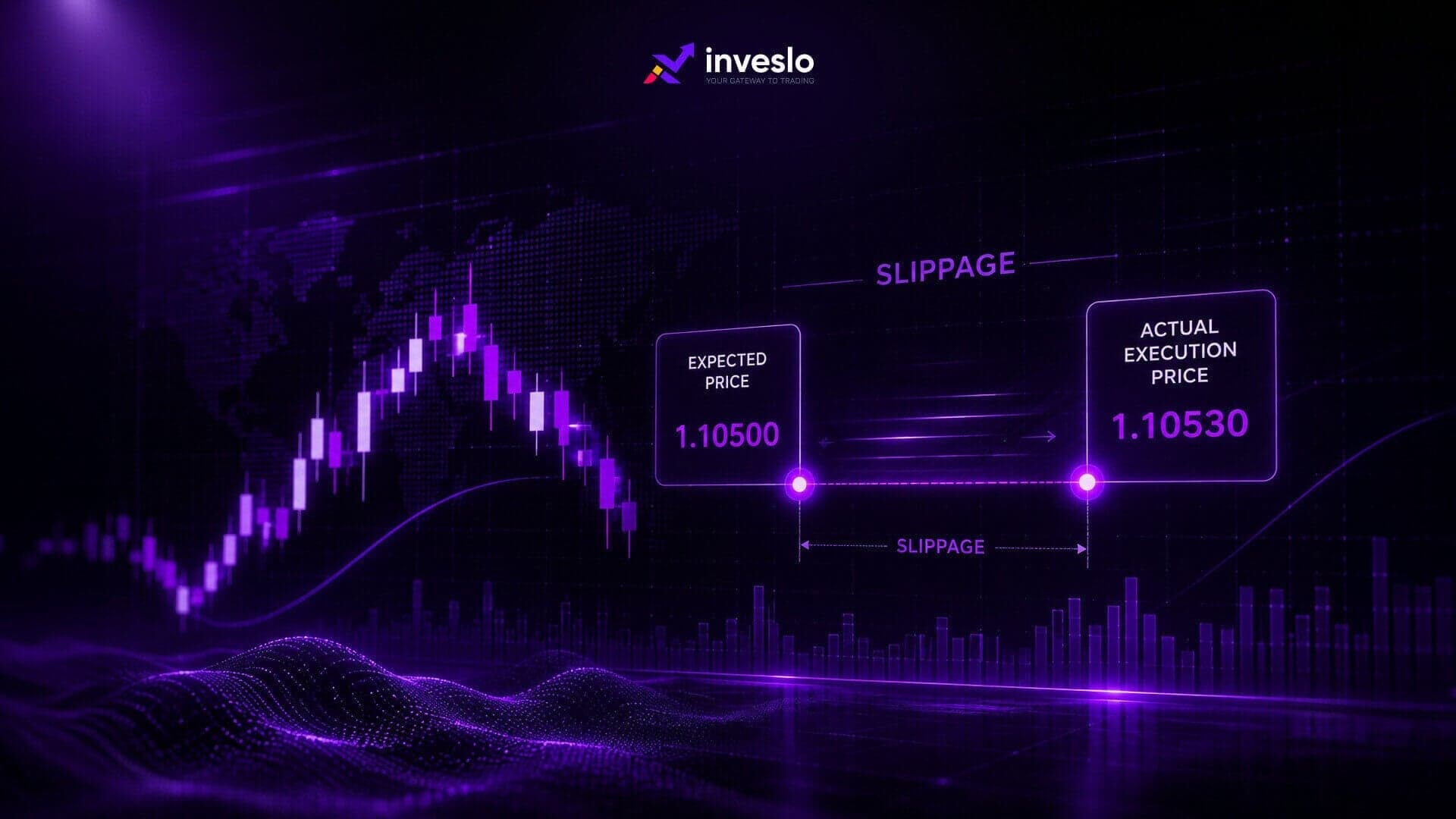
Slippage in Trading: What it is and How to Reduce it?
Slippage in trading costs most retail traders more than they realise, and it's rarely discussed until after the damage is done. You place an order at one price, it fills at another, and suddenly your trade is already underwater before the market's moved a tick against you. It happens fast.