In the rapidly evolving sphere of forex, it's important to understand market direction. Among many ways to evaluate market movements, moving averages are one of the most employable and beneficial ways. A moving average allows traders to effectively smooth price data over a certain timeframe, allowing them to easily confirm trends and account for certain market noise in the meantime.
This blog will highlight exactly what a moving average is, why they are important in forex, and how traders can create a steadfast trading strategy using moving averages. This guide will help traders at all levels of experience recognize effortlessly.
What Is a Moving Average?
Moving averages are technical indicators that calculate average prices of a currency pair for a selected period while smoothing out some short-term volatility to highlight longer-term trends. It's akin to considering the average temperature in a week rather than high and low temperatures recorded daily; the effect is only to be clearer regarding the direction. Thus, in forex trading, moving averages tend to serve as trend indicators, partly implying whether a pair is forming upward trends or downward trends, or even is just moving sideways.
Several types of MAs and, each with unique characteristics:
- Simple Moving Average (SMA): It averages the prices over the time span chosen and assigns equal weights to all the price points in the data set.
- Exponential Moving Average (EMA): This is an advanced type of average wherein recent data have more weight and are, hence, more responsive to market changes.
- Weighted Moving Average (WMA): Very similar to EMA in weighting recent prices, albeit with its formula for the calculations.
- Smoothed Moving Average (SMMA): Considers a longer data range to obtain a smoother curve, so that it reduces noise.
Each different type is used for a different trading style, with SMAs working for long-term trends and EMAs for short-term, energetic trades.
Why Are Moving Averages Important in Forex Trading?
Moving averages help a lot since they make a complicated price chart into a simple line, helping you notice trends and pick suitable times to buy or sell. You can use them successfully when trading over one minute or over a whole day. You can pay attention to the key trend in forex trading since the moving average helps stop distractions caused by useless or unimportant signals. You can make the most of moving averages on the MT4 trading platform and use them for any form of forex trading.
Not only do they simplify prices, but they can also let you see if there is a trend changing direction. In brief, if the shorter line goes past the longer line, the price action may turn positive and prompt a buy. When the smaller moving average goes under the bigger one, this could hint that prices are falling and encourage selling. Both new traders and experts often use moving averages, thanks to how easily people can comprehend them.
Types of Moving Averages Used in Forex
01. Simple Moving Average (SMA)
The SMA is calculated by selecting an average of prices from a certain range. For example, twenty days are considered for calculating the 20-day SMA: the sum of closing prices for the last 20 days is divided by 20. It reacts more slowly to price; this attribute could be fit for long-term strategies.
02. Exponential Moving Average (EMA)
The EMA is reactive to price movement on a greater level with the newest data. Hence, it is favored by short-term traders in search of quicker signals.
03. Weighted Moving Average (WMA)
Every individual data point is weighed differently, with more emphasis put on the recent prices. It is like the EMA with a little variance in the method of calculation.
Whether you're selecting SMA or EMA, or WMA depends on your trading style and timeframe.
Moving Average Trading Strategy Explained
In a moving average strategy, signals for buying or selling are given by one or more moving averages. Here are some ways that people typically do it:
1. Single Moving Average Crossover
This method relies on using two moving averages for different periods, which are usually the short-term and long-term ones. A cross between the short-term and the long-term moving averages indicates that you should buy the asset. And when the indicator falls below the MA, you should sell.
Example:
- When looking at the chart, you can see how the trading price is doing compared to these two lines.
- If the 50-day line goes above the 200-day line, it implies the trend is going up.
2. Double Moving Average Crossover
Some individuals depend on these indicators to see fast market movements and determine the trend.
3. Moving Average with Price Action
Crossovers are not needed for some traders; they can use only a moving average to help determine prices. Whenever the price goes above the moving average, it shows a bullish trend. A reading below tells us the trend is bearish. You can use this technique together with other popular technical analysis tools.
How to Use Moving Averages in Forex Trading
Make sure you know how you will use moving averages when creating your trading plan. Here, you will find instructions for incorporating them into your trading approach.
01. Choose the Right Moving Average
Test and find out if an SMA, EMA, WMA, or SMMA is the best option for your style of trading. In practice, day traders typically use EMAs because they react quickly to the recent market movement, while swing traders may go with SMAs for their ability to capture longer trends.
02. Select the Timeframe
When you decide what you want to achieve, that will help you determine the timeframe. Traders holding short positions often make use of a 10- or 20-period MA on a 5-minute chart, whereas long-term holders often choose a 50- or 200-period MA on a daily chart. See which strategy you respond to the best.
03. Identify Trends
They help identify the trend in price by presenting the overall movement. If the MA is pointing upward, it indicates a bullish trend; if it goes down, it shows a bearish trend. If MA is flat, it suggests that prices are moving sideways and staying within a given range.
04. Use Crossovers for Signals
A crossover takes place when the moving averages cross each other. If the 10-period MA exceeds the 50-period MA, it shows a buy signal; on the other hand, a sell signal is signalled when the 50-period MA closes above the 10-period MA. These indicators are commonly used in trading using moving averages.
05. Combine with Other Tools
Moving averages usually give the most information when used with additional technical tools such as support and resistance or momentum indicators. This approach makes your strategy more effective as it filters out some false results.
Popular Moving Average Trading Strategies
Allow me to share several popular moving average trading strategies that traders make use of in the forex market.
The Golden Cross and Death Cross
The occurrence of the Golden Cross happens when a 50-day moving average moves above a moving average with a 200-day period, showing a likely bullish trend. However, when the short-term MA crosses beneath the long-term MA, the pattern is taken as a sign of a bearish trend. For traders who follow trends, these signals are important, but they should always be confirmed to avoid being misled.
Dual Moving Average Crossover
Under this technique, traders look at MA values from two different periods, such as 10-period and 20-period EMAs. When the short MA goes above the long MA, it gives a buy signal, and a sell signal happens when the short MA crosses below the long MA. It proves useful during market trends and is less dependable when the market is not uniform.
Moving Average Envelopes
You need to draw bands that go 5% above and below your MA when using envelopes. If prices reach the upper band, it might mean the market is overbought, and if they reach the lower band, it could mean the market is oversold. They use them to spot possible times when the trend may switch.
MA as Dynamic Support and Resistance
They sometimes act like zones that help prices rise or fall. A good example is that, as the market is in an uptrend, the 50-period MA could support price movements. This information helps make trading decisions about when to buy and when to sell or stop trading.
Best Practices for Using Moving Averages in Forex Trading
These are some tips that should help you:
- Avoid using many lines on a chart because excess indicators may be confusing.
- Test Running Your Moving Averages: Place your strategy on test using a pretend account or by looking at previous market activity.
- As markets can change, each person’s trade strategy should be adaptable. Your moving averages’ period should change to maintain correlation with the level of market ups and downs.
- It is important to confirm the wider trend before deciding to trade in a market.
Applying these steps makes it easier to connect your moving average strategy with other forex trading methods.
Advantages and Limitations of Moving Averages
Advantages
- MAs are not complicated and can be used by even new traders.
- Moving averages (MAs) can help in trading at any period and involve numerous currency pairings.
- MAs can provide an additional way to identify the trend in the market and limit the risk of making wrong guesses.
Limitations
- MAs use the past prices to create the lines, so they are late compared to the recent action in the market.
- In a trading range, moving averages can often lead to meaningless results.
- MAs are not always enough by themselves because traders may need more from their signals.
Common Mistakes to Avoid
- Moving averages are easy to use, but traders do occasionally make common errors.
- Not balancing your signals: Use moving averages together with other indicators.
- Forgetting the main picture: Look at broad changes rather than short-term changes in the market.
- No risk management is harmful, so use a stop-loss and handle your trading carefully.
- Preventing these errors is necessary for creating a trustworthy forex strategy.
Concluding Thoughts
Moving averages are useful for forex traders because they help traders identify trends in an easy-to-understand way. You can trade with confidence in the forex market once you understand what a moving average is and how to apply it in a moving average trading strategy.
Moving averages can help your trading on the MT4 platform, they can provide insights when used with other technical analysis tools, and they can help improve your results.
If you are interested in enhancing your trading, contact our experts at Inveslo to learn about the role moving averages can play in your forex trading strategies.
Related articles
 ForexInveslo
What is the Consumer Price Index (CPI)?
The Consumer Price Index (CPI) tracks the average change over time in prices consumers pay for a representative basket of goods and services. It is one of the main measures used to monitor consumer inflation.
 ForexInveslo
What is a Trading Journal & How Do Traders Use It?
A trader can remember a big winner for months and forget three poorly planned trades from the same week. That is one reason relying on memory makes trade review difficult.
 ForexInveslo
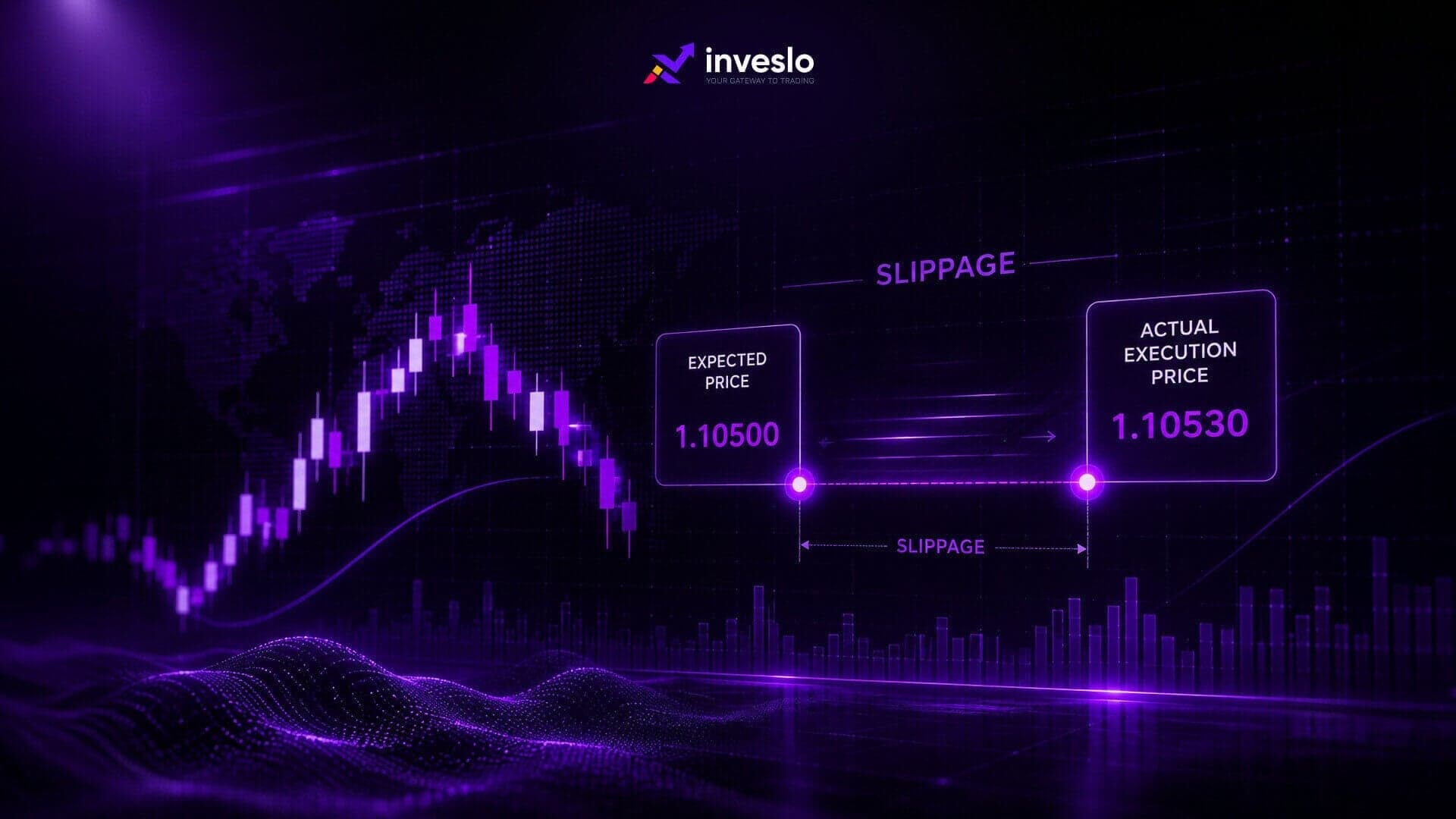
Slippage in Trading: What it is and How to Reduce it?
Slippage in trading costs most retail traders more than they realise, and it's rarely discussed until after the damage is done. You place an order at one price, it fills at another, and suddenly your trade is already underwater before the market's moved a tick against you. It happens fast.