
Order Blocks are one of the largest, trendy ideas in the field of forex trading. No matter whether you have been involved in the forex game or not, you either do not know this term or you have certainly heard this word enough times to know that this is a thing. Knowing how pertinent order blocks may transform the game on your side.
Today, in this guide, we will clearly and concisely explain what order blocks are, how they operate in the marketplace place and how, in the process, you can apply order blocks in your trading plan of action.
Understanding Order Blocks in Forex Trading
What Is an Order Block in Forex?
An order block is a particular price point of forex charts where big market players (as banks, hedge funds, or institutional trading agents) issue huge buy or sell orders. The given orders can regularly produce a block of liquidity that influences the price direction. As the prices revisit these areas, it will have a strong reaction, which is to reverse or carry the direction of the institutional activity. By discovering these zones, traders can envisage possible market turning points or consistency patterns.
Why Are Order Blocks Important?
The importance of order blocks is discovered with the help of the footprints it creates by institutional traders who operate with enormous volumes in the liquid market of forex trading. These are the so-called smart money that can move the price by force as opposed to the retail traders. Using order block analysis, traders will be in a position to synchronize their strategies with the key players in the market, hence their chances of making successful trades will be high. This is what makes the use of order blocks to constitute a solid backbone to most forex trading options.
Types of Order Blocks
Order Blocks typically come in two forms:
- Bullish Order Block: This is created before a big upward move, usually after a downtrend or consolidation, indicating buying demand.
- Bearish Order Block: This is created before a strong downward move, typically at the top of the uptrend or during price consolidation, indicating selling pressure from an institution.
Being familiar with these can help us try to anticipate price direction in the future and when to potentially enter a trade.
Identifying Order Blocks on Your Chart
Identifying order blocks requires good skill and previous knowledge of some candle patterns. While there is no tried and tested definition for every single order block, we will give you the main characteristics and how to identify them.
- The "Last Down Candle Before an Up Move" (Bullish Order Block): For a bullish order block, you want to find the last down bearish (down-closing) candle before a strong, impulsive, upside move that candle represents the last price at which institutional participants bought and accumulated, before they pushed the price up against the selling. The ensuing strong bullish move proclaims to the world that there were institutional long positions established with necessary upside price movement from sellers.
- The "Last Up Candle Before a Down Move" (Bearish Order Block): The same can be said for a bearish order block. You will find the last up-opening bullish (up-closing) candle before a strong, impulsive, down move. Again, that candle can represent all the positions of institutional participants (short) who accumulated selling against nicely bullish and smoothly up price movements, with the next price movement down denoting the significant downside movement of the institutional, short sellers.
- The Impulsive Move Is Everything: The most important feature of a valid order block is the strong impulsive move that occurs after its formation. This move should break key highs or lows, indicating a shift in momentum from the market and potential participation from institutions. If there is no impulsive move, the "block" may simply be consolidation.
- Consider Liquidity Grabs (Optional and Powerful): Sometimes price may dip below a low (for a bullish move) or pop above a high (for a bearish move) before a move "sweeping" liquidity (picking up stop-losses). This occurs before a strong reversal. This usually happens around order blocks and provides more credibility for the order blocks.
- Greater time frames represent More facts: Although we can find order blocks on any time frame we choose, the more time frames we consider, the more reliable they will be and carry more weight (e.g., 4-hour, day, weekly). These larger scales are usually where such moves by institutions are noticeable.
How Order Blocks Work in Forex Trading
Institutions complete massive transactions in phases, hence preventing any market shock. Consequently, they revisit several occasions to the same price zones, constituting Order Blocks. These are areas where institutional orders are booked and revisited to be able to take their complete positions.
In the case of retail traders, these areas are important to enable them to coordinate their trades with the actions of the institutions. Such consistency may lead to, among other things, sharper entries, fewer stop-losses, and improved risk-reward ratios on the whole. Order Blocks provide information about the liquidity of the market and intentional prices, basically.
Order Blocks Trading Strategy
Building a Strategy Around Order Blocks
In an order block trade strategy, one uses these zones in making a trade by either buying or selling. Following is a step-by-step instruction on the development of one:
- Determine the Trend: Find out the general market direction with the help of the trendlines or moving averages.
- Find Order Blocks: Place apposition zones to be followed by robust breakout candles.
- Confirm the Block: To validate the order block, use volume or any other indicators.
- Plan Entry and Exit: Enter when the price returns to where the order block was, and there are indications that it tries to reverse or continue with the price. There are stop-loss orders placed below the block (on bullish trade) and vice versa on bearish trade.
- Control The Risk: Never ever go without applying the right technique of risk management, like staking only 1-2 % with the trading account.
Combining Order Blocks with Other Strategies
When used together with any forex trading strategy, order blocks are most effective. For instance:
- Trend Following: Place order blocks to verify the points of the trend directions.
- Breakout Trading: An order block may be an indication of breakout areas where the price will break out at a sharp angle.
- Price Action: Order blocks should be used with Candlesticks, e.g., pin bars or engulfing candlestick patterns, to increase the probability of setups.
This diversified strategy increases the credibility of your deals in the forex liquid trading market.
Practical Example
Imagine a scenario with the EUR/USD pair in an uptrend. You spot a consolidation zone at 1.2000. But then you see a bullish candle break above 1.2050 with lots of volume. You realize that the area around 1.2000 is likely a bullish order block. Then, the price comes back to 1.2000. You spot a rejection candle, signaling it's time to buy! You place a long position on the EUR/USD, put the stop-loss below 1.1980, and look to target near the most recent high. This diligent approach will set you up for the most successful outcome possible.
Benefits of Using Order Blocks in Forex Trading
Improved Market Timing
Order blocks, which are price ranges where institutional clients entered, can help retail traders identify ideal entry and exit levels. By occupying space where the institutional traders are, it's easier to have meaningful market timing, rather than randomly entering the market without considering how different price points fit into your overall strategy.
Enhanced Risk Management
Order blocks frequently coincide with key support or resistance, thus it's simpler to enter stop loss orders in the vicinity of those areas. This eliminates some risks associated with key price points because if the stop loss order has been hit, the loss has been accepted by exiting a potentially very unprofitable situation or protecting capital in a high-volatility market.
Versatility Across Timeframes
Order blocks will work on any time frame, from scalping 5-minute charts to daily charts for swing trades. This means order blocks can be used and applied to different types of traders, different styles, and traders with different goals.
Challenges of Trading Order Blocks
False Signals
Not every order block that is noted will deliver a qualifying trade. Order blocks or order entry levels may be only appearances because false breaks (also called market noise) can impersonate them and may cost you money. The best practice to prevent getting into a wrong trade situation is to make certain that you re-prove the order block with some dual indicator or price action signal.
Requires Practice
Determining order blocks will be time and experience dependent. The new trader might find it hard to determine what a real order block is and what a random price movement. That can be alleviated by replication of chart analysis and backtesting.
Market Volatility
The markets most of the liquid markets, including the forex trading markets, are very volatile, and the economic news is very abundant during the trading week. Such volatility may give a hitch even with the order block trimmed settings. Economic calendars or events happening should always make you aware, to ensure that you are not taken by surprise.
How Inveslo Incorporates Order Blocks
With platforms like Inveslo, traders are set up to understand and work with market dynamics, locate important price levels, and actually make trades. While Inveslo provides excellent trading conditions, the success of your strategy is based on your understanding of key concepts like order blocks and your ability to deploy them in a consistent way. Traders can take advantage of platforms like Inveslo to gain access to the market data and charting capabilities to accurately identify these key institutional footprints.
Final Verdict
Order Blocks provide a unique insight into market dynamics that are driven by institutional traders. Identifying and trading in these specified areas of price can increase your accuracy and your confidence as a trader. Whether you are just starting or you have been trading for many years, Order Blocks can change everything for you.
If you are ready to start trading smarter and gain a greater understanding of institutional price action, we have experts available to help you start your path towards trading success.
Frequently Asked Questions (FAQs)
1. What is an order block in forex trading?
An order block is a price area where institutional traders put large sell or buy orders, which determine what will happen to the price in the future. Such areas can demonstrate the support or resistance degrees, and this is important to traders.
2. How do I identify order blocks on a chart?
Seek zones of consolidation and follow them with a high-volume breakout candle. Such regions usually show institutional activity, where potential order blocks occur.
3. Can order blocks be used in all timeframes?
Order blocks are useful in any trading period, whether short-term scalping or long-term swing trading, so they can be applied to a wide variety of trading approaches.
4. How many times can an Order Block be retested?
In general, the initial retest of a fresh order block is regarded as the most potent. The second retest might not have a proportional reward because the "unmet orders" or other institutional interests on their part at that particular price level may also reduce. Traders who do not trade the order blocks on the first retest it might be better to wait after the first test, then trade the order block only when you see strong confluence on the second or third retest.
5. What is the difference between a Bullish and Bearish Order Block?
A Bullish Order Block is the final bear candle (a candle that closes at the bottom) before a remarkably high, impulsive extension on the upside, which means long positions are being accumulated by the institutions. The final bullish (up-closing) candle before a heavy, impulsive down-swing is a Bearish Order Block, which shows institutional buying of short positions.
6. Can I use Order Blocks for scalping?
Yes, it is possible to scalp with order blocks on a lower timeframe (e.g., 1-minute, 5-minute). The actions of price on these timeframes may be however more volatile and prone to noise. It is usually suggested to those traders who are experienced and are accustomed to making fast entries and exits, as well as those familiar with the big picture context of higher timeframe trading. Never skip finding higher time frame order blocks to find entries on lower to scalp.
Related articles
 ForexInveslo
What is the Consumer Price Index (CPI)?
The Consumer Price Index (CPI) tracks the average change over time in prices consumers pay for a representative basket of goods and services. It is one of the main measures used to monitor consumer inflation.
 ForexInveslo
What is a Trading Journal & How Do Traders Use It?
A trader can remember a big winner for months and forget three poorly planned trades from the same week. That is one reason relying on memory makes trade review difficult.
 ForexInveslo
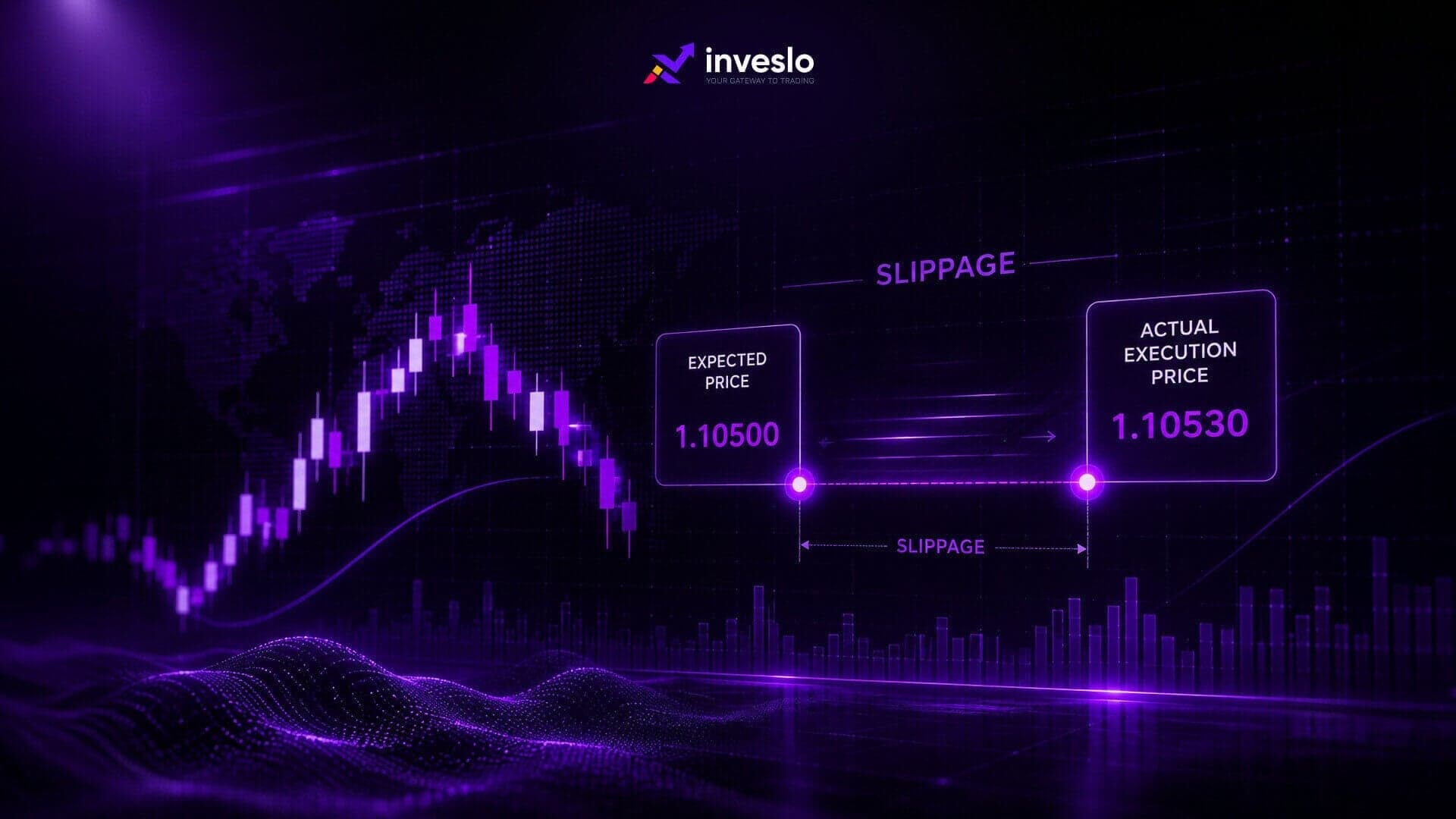
Slippage in Trading: What it is and How to Reduce it?
Slippage in trading costs most retail traders more than they realise, and it's rarely discussed until after the damage is done. You place an order at one price, it fills at another, and suddenly your trade is already underwater before the market's moved a tick against you. It happens fast.