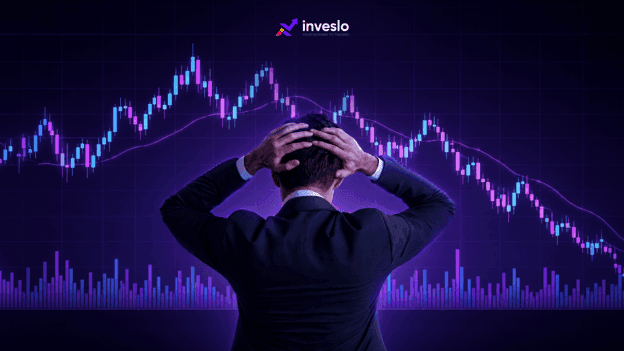
Revenge trading has ended more trading careers than bad strategy ever will. One loss, one emotional reaction, one oversized position placed in anger, and the account you spent months building starts unravelling fast. If you've ever doubled your position size after taking a hit, you already know the pull. This article covers the warning signs, the psychology behind them, and the structural steps that can actually stop it before it costs you.
Table of Contents
- What Is Revenge Trading?
- The Psychology Behind It
- Warning Signs You're Revenge Trading Right Now
- How Revenge Trading Destroys Accounts
- How to Stop Revenge Trading Before It Stops You
- The Bottom Line
- FAQs
What Is Revenge Trading?
Revenge trading is entering new trades impulsively and emotionally after a loss, with the primary goal of recovering that money as fast as possible. It isn't a strategy. It's a reaction. And that distinction matters more than most beginners appreciate.
A loss triggers frustration, and frustration overrides the systematic thinking that protects your capital. Instead of stepping back, you jump back in, often with a larger position, on a market that hasn't moved in your favour at all. You're not trading the chart anymore. You're trading your emotions.
The word "revenge" fits because the behaviour is literally directed at the market itself. Traders genuinely feel owed something back, which is, of course, a cognitive distortion. Markets don't owe you anything. And no position size will change that.
The Psychology Behind Revenge Trading
Understanding why revenge trading happens is half the battle. At its core, the behaviour is rooted in loss aversion, a well-documented bias where the pain of losing feels roughly twice as intense as the pleasure of an equivalent gain. Kahneman and Tversky formally documented this, and it remains one of the most robust findings in behavioural economics.
After a loss, your brain shifts into a state that prioritises recovery over rational analysis. Cortisol levels rise, decision-making quality drops, and risk tolerance paradoxically increases, even though this is the worst possible moment to be taking on more risk.
Experienced traders have known this for years. The market doesn't hurt you. Your response to it does.
Revenge trading also feeds a loop. A bad trade leads to an emotional trade, which leads to another loss, which amplifies the emotional state further. Breaking the loop requires recognising the psychological state before acting, not after the damage is already done.
Warning Signs You're Revenge Trading
Most traders assume they'll recognise revenge trading when it happens. They won't. The emotional state that drives it is precisely the one that impairs self-awareness. So instead of relying on intuition, watch for these concrete behavioural signals:
- Position size has increased: You placed a trade two or three times larger than your normal lot size, with no specific risk-based reason for doing so.
- Entry had no plan: You cannot point to a clear technical or fundamental reason you entered. You just felt it was time to "get back in."
- Timeframe has compressed: You shifted from your usual H4 or daily chart analysis down to M5 or M15 charts, chasing faster outcomes.
- Loss is still on your mind: You're thinking about the previous trade while managing the current one, which means your focus is split.
- Rules were skipped: Your trading plan specifies conditions for entry. You ignored at least one of them.
Any one of these is a red flag. Two or more at the same time, and you're almost certainly revenge trading. Stop, close the platform if you need to, and step away.
How Revenge Trading Destroys Accounts
The mechanics are straightforward, even if the emotional pull isn't. When you increase your position size after a loss, you amplify the potential damage on the next trade. If that trade also loses, the deficit grows significantly wider, and the psychological pressure to recover escalates with it.
Consider a simple example.
A trader with a $5,000 account loses $300 on a well-planned trade. That's a 6% drawdown, manageable under most risk frameworks. But entering a revenge trade at triple the lot size, then losing again, could add another $900 to the hole, pushing the total drawdown to 24% across just two trades. Recovering from 24% requires a 31.5% gain just to break even. That's a steep climb.
Leverage amplifies this problem significantly. Most regulated brokers have a cap at leverage and that cap exists precisely because higher leverage combined with impulsive position sizing creates catastrophic loss scenarios. A revenge trader using maximum leverage can burn through significant capital within minutes.
Activity is not the same as edge. Not even close.
How to Stop Revenge Trading Before It Stops You
Prevention is the right frame here, not recovery after the fact. By the time you're mid-revenge-trade, the cognitive tools that would help you are already offline. The goal is to build systems that activate before the emotional state takes hold.
Here are the most effective structural interventions:
- Set a daily loss limit and honour it. Decide before the session opens how much you're willing to lose that day. When you hit that number, close the platform. No exceptions, no "one more trade."
- Require a written rationale for every entry. If you can't write down the reason for the trade in one sentence before entering, you shouldn't be entering it. This single rule eliminates the majority of impulsive trades.
- Build in a mandatory cooling-off period after a loss. A minimum of 30 minutes away from the screen after any losing trade gives the cortisol spike time to settle. Many professional traders apply a full 24-hour rule after a significant drawdown session.
- Review your trades in a journal, not in the moment. Emotional pattern recognition works far better in retrospect. Weekly journal reviews will show you exactly when and why you tend to revenge trade, and that self-knowledge becomes a genuine defence over time.
The broader principle is this: Risk management is a system, not a feeling. If your process depends on how you feel in the moment, it will fail precisely when you need it most.
The Bottom Line
Revenge trading isn't a beginner's problem. It affects experienced traders too, often in subtler forms like slightly oversized positions or marginally rushed entries after a difficult session. Recognising the warning signs early is the most reliable way to protect your capital.
- Loss aversion: The emotional driver that turns a manageable loss into a compounding disaster if left unchecked.
- Behavioural signals: Sudden position size increases, unplanned entries, and compressed timeframes are your early warning system.
- Structural rules: Daily loss limits, mandatory cooling-off periods, and written entry rationales are more reliable than willpower alone.
The next time revenge trading pulls at you after a bad trade, your best move is to stop, not to act.
FAQs
Is revenge trading only a problem for beginners?
No. Experienced traders are not immune. The emotional triggers behind revenge trading, particularly loss aversion, affect traders at all levels. The difference is that seasoned traders typically have systems in place that create friction between the impulse and the action.
How long should I wait before trading again after a loss?
A minimum cooling-off period of 30 minutes is a common starting point. After a large drawdown or a particularly frustrating session, many professional traders apply a full 24-hour rule. The key is deciding this in advance, not in the heat of the moment.
Can a trading journal actually help prevent revenge trading?
Yes, significantly. A consistent journaling practice lets you identify the conditions under which you tend to make emotional decisions. Once you see the pattern clearly in past data, you can design pre-session rules specifically to address those vulnerable moments.
Does leverage make revenge trading more dangerous?
Absolutely. Leverage, which means controlling a larger position than your capital alone allows, multiplies both gains and losses. When combined with impulsively oversized positions after a loss, even moderate leverage can accelerate a drawdown to account-threatening levels within a single session.
Related articles
 ForexInveslo
What is the Consumer Price Index (CPI)?
The Consumer Price Index (CPI) tracks the average change over time in prices consumers pay for a representative basket of goods and services. It is one of the main measures used to monitor consumer inflation.
 ForexInveslo
What is a Trading Journal & How Do Traders Use It?
A trader can remember a big winner for months and forget three poorly planned trades from the same week. That is one reason relying on memory makes trade review difficult.
 ForexInveslo
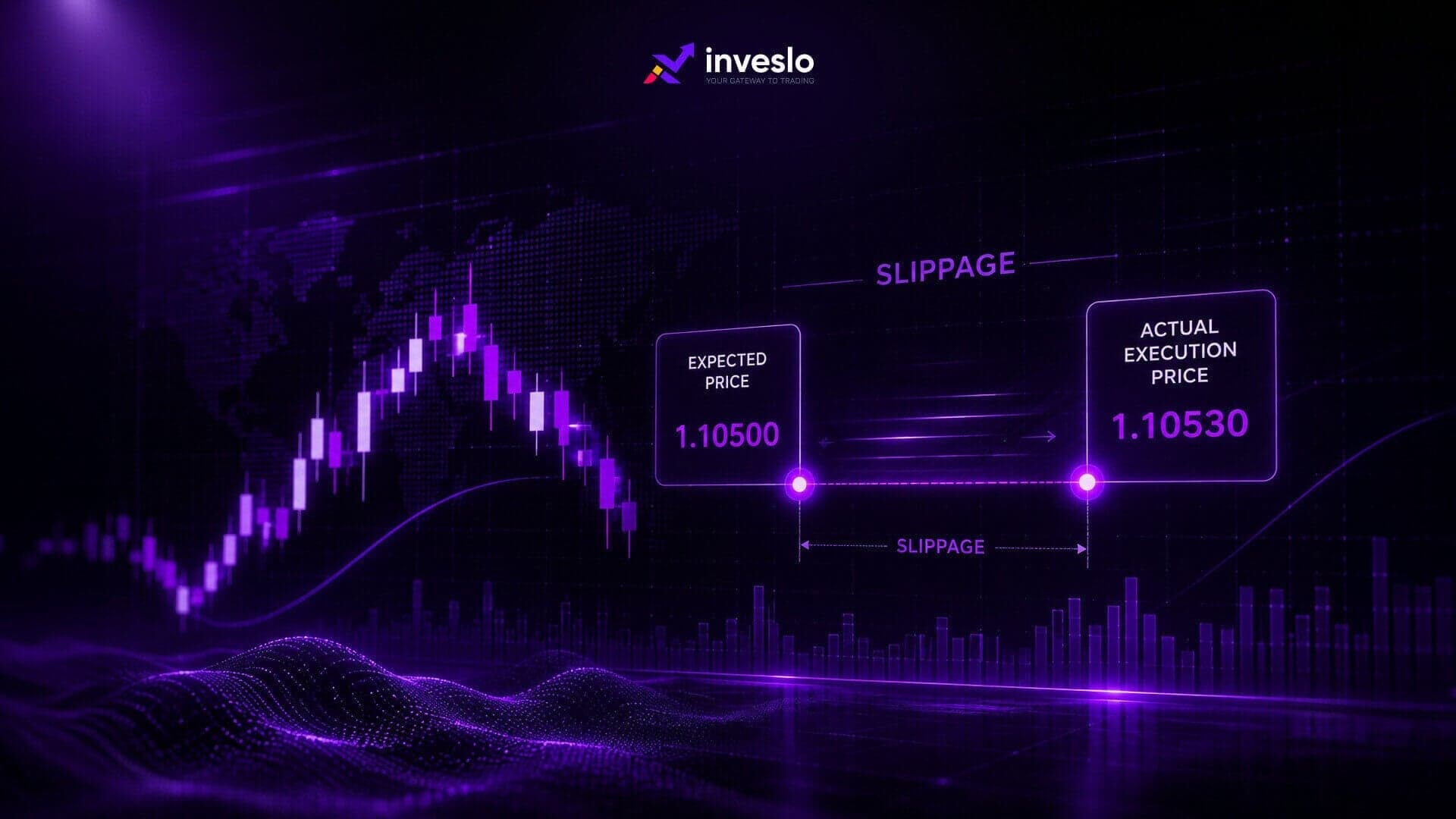
Slippage in Trading: What it is and How to Reduce it?
Slippage in trading costs most retail traders more than they realise, and it's rarely discussed until after the damage is done. You place an order at one price, it fills at another, and suddenly your trade is already underwater before the market's moved a tick against you. It happens fast.