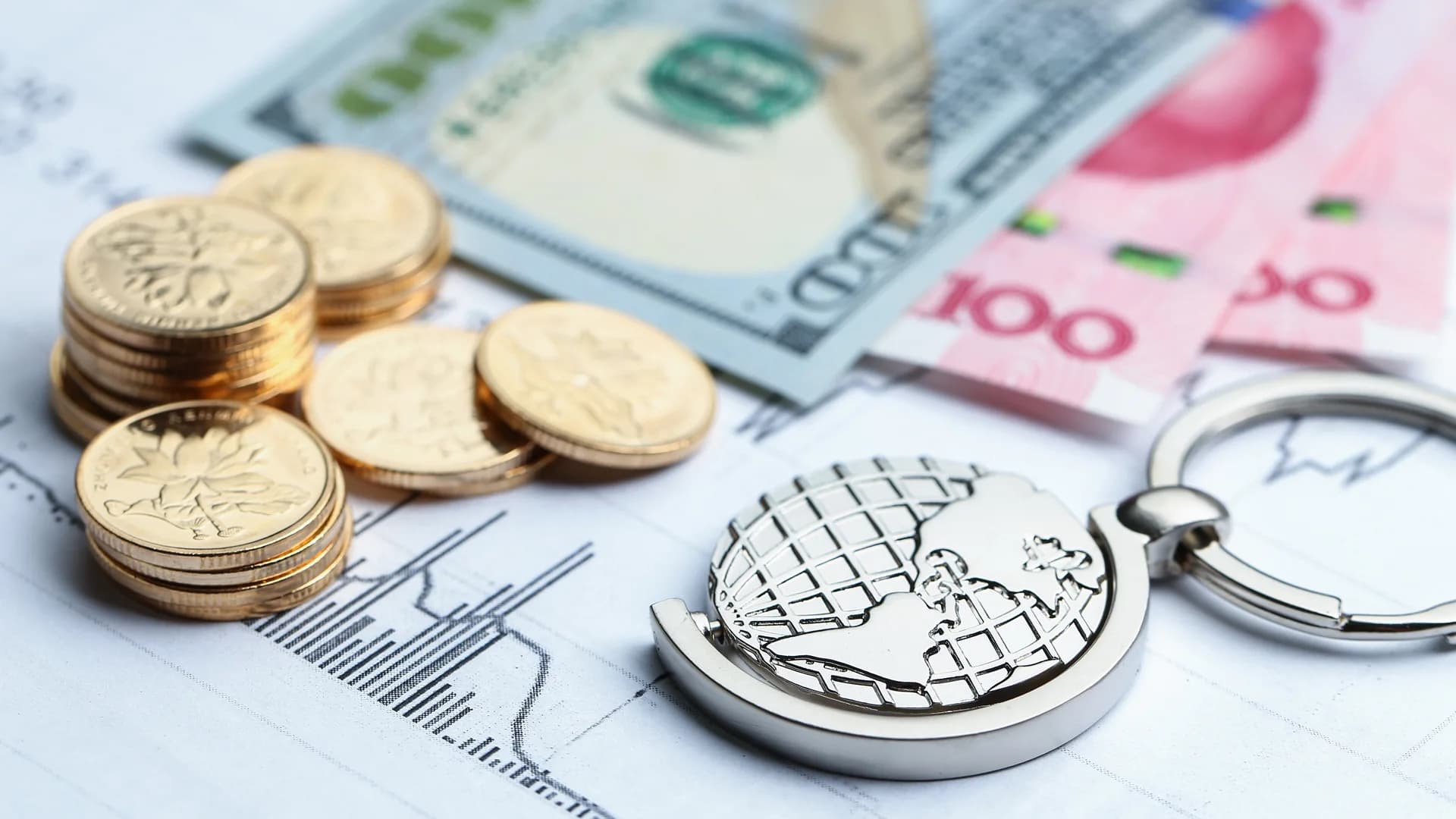
Foreign exchange rates refer to the values at which one currency can be exchanged for another in the global marketplace. They play a crucial role in international trade and finance, influencing the flow of goods, services, and investments across borders.
Foreign exchange rates fluctuate constantly due to various which we are going to mention in the upcoming section. Understanding and monitoring foreign exchange rates is vital for navigating the global economy and managing currency-related risks.
So, today in this blog, we will explain every aspect related to what are foreign exchange rates. Stay tuned!
What is an Exchange Rate?
A foreign exchange rate or forex rate is a number that tells you the relative value of one currency versus another.
The exchange rate between two currencies is often determined by the economic activity, market interest rates, gross domestic product, and unemployment rate in each of the countries. Foreign exchange rates are set in the global financial marketplace and are based on several factors. Banks and other financial institutions trade currencies around the clock to try and get the best deal. Changes in rates can happen hourly or daily, with small changes or large incremental shifts.
An exchange rate is typically quoted using an acronym for the country's currency. The acronym USD represents the U.S. dollar, while EUR represents the euro. To quote the currency pair of the dollar and the euro, it would be EUR/USD. In the case of the Japanese yen, it is generally USD/JPY, or one dollar to one yen. The exchange rate of 100 means that 1 dollar equals 100 yen.
Exchange Rates of a currency are typical of two types.
Flexible Exchange Rates
Flexible exchange rates are rates that are determined by the foreign exchange market. These exchange rates fluctuate constantly on a moment-by-moment basis. Here, the prices of currency vary constantly based on which currencies Americans are most likely to use - the most common currency units in the world - which includes European euros, Mexican pesos, British pounds, Canadian dollars, and Japanese yen.
Fixed Exchange Rates
We have currencies like the Saudi riyal that rarely change. Simply put, that's because the countries in that group use fixed exchange rates that only change when the government decides to change them. These rates are usually pegged to the US dollar and the central bank keeps the exchange rate fixed by holding U.S. dollars. To explain, under circumstances where the local currency's value falls, the bank sells its U.S. dollars for local currency reducing the supply of local currency in the market and leading to an increase in its value. It also pushes the dollar’s supply and as a result, the dollar's value goes down. On the contrary, if there is an increase in the demand for a currency, the outcomes are opposite.
Suggested read: Forex or Stock
How do Exchange Rates Fluctuate?
Currency rates are determined by the supply and demand of that currency. The world's currencies are mostly traded based on flexible exchange rates, which means their prices change based on the supply and demand in the forex market. When there is high demand for a currency, the value of that currency will usually go up.
Exchange rates, often known as cash values or market values, are used to determine exchange rates. An exchange rate may also have a forward value, which is determined by predictions of the currency's future worth in relation to its current spot price.
Changes in expectations for future interest rates in one country compared to another may cause forward rate values to shift. Tourism, international trade, mergers and acquisitions, speculation, and the perception of safety in terms of geopolitical risk are the main drivers of this change.
Factors Influencing Exchange Rates
1. Interest Rates
If a country has a high-interest rate, lenders have an opportunity to earn more. This attracts foreign capital that seeks to earn at higher rates. The result is that the country's exchange rate rises, strengthening its currency. Interest rates are directly related to inflation, as well as exchange rates.
The central bank of a country will try to influence inflation or exchange rates through the interest rate mechanism. A higher borrowing cost is a result of high-interest rates. It may happen that despite an increase in the interest rate, inflation does not drop significantly, which will have less than expected effects on the exchange rate. On the other hand, exchange rates tend to fall when interest rates fall.
2. Deficits
The current account deficit is one of the most important deficit parameters: the difference between a nation's earnings and expenditures. A current account deficit means that the country is spending more to buy than it earns.
Consequently, their foreign exchange earnings via exports are not enough; they will have to borrow money abroad to make up the difference. The country's exchange rate is lowered by this high demand for foreign currency.
3. Inflation
If a country has consistently low inflation rates, the value of its currency usually increases. This is because the purchasing power of the currency becomes higher than the other currencies it is compared to. Conversely, higher inflation rates cause the currency to depreciate, losing purchasing power and value against other currencies.
4. Import-Export
Exporting gives a country some money while importing spends it. If a country's exports are growing at a faster rate than its imports, this is a good sign for its currency's exchange rate. Higher exports mean higher demand for the country's currency and therefore its value.
5. Debt
When a country gets involved in large-scale infrastructure projects, it generally won't have all the funds for them. Therefore, it borrows funds both at home and abroad. The economy is boosted by these projects; However, the public debt it takes generates a deficit, making it an unattractive investment location.
Large public debt is a recipe for high inflation, meaning the country's currency weakens and it will take longer to pay off the debt and interest, which affects borrowers' returns. The worst case? If the country has to default on its loans because it can't pay back due to its huge debt, high inflation, and depressed exchange rates.
How to calculate exchange rate?
So, the equation of calculating exchange rate is:
Exchange Rate = Money in Foreign Currency / Money in Domestic currency
Let’s take an example,
A tourist from the U.S. to France gets 400 USD worth of 380 EUR when in France.
To identify the exchange rate, equation applied as per above formula:
Foreign currency (USD) / Domestic currency (EUR) = Exchange Rate
$400 / €380 = 1.05
Suppose later he converts EUR to USD back for the remaining balance (€55). If the exchange rate has dropped to 1.03, the calculation will be:
€55 x 1.03 = $56.65
Note: The sale rate is the price at which a traveller can exchange their foreign cash for local money. The buy rate is the price at which one purchases travellers’ leftover foreign cash in order to convert it to the local currency.
Suggested read: Risk Management Strategies
Forex Trading Tip for Beginners
While Forex trading is capable of creating substantial profits, it is also a high-risk investing strategy. Beginners should start to learn forex by first establishing a decent understanding of the basics of forex and currency exchange rates. One must begin by registering a brokerage account. Especially if you are a beginner, Inveslo recommends opening a Standard STP account with low capital requirements. The next step is to plan a trading strategy as it helps to establish general trading guidelines and roadmaps. A good trading strategy is based on your situation and financial reality. Another important factor is to always check your position at the end of the day when you start trading. Lastly, remember to maintain an emotional equilibrium.
The Bottom Line
In a nutshell, the rate at which one currency will be exchanged for another is referred to as the exchange rate. Some exchange rates are linked or fixed to the value of a particular country's currency, however, most exchange rates are floating and will increase or decrease depending on market supply and demand. Changes in exchange rates have an impact on businesses, the price of supplies, and the demand for their products on the global market.
Related articles
 ForexInveslo
What is the Consumer Price Index (CPI)?
The Consumer Price Index (CPI) tracks the average change over time in prices consumers pay for a representative basket of goods and services. It is one of the main measures used to monitor consumer inflation.
 ForexInveslo
What is a Trading Journal & How Do Traders Use It?
A trader can remember a big winner for months and forget three poorly planned trades from the same week. That is one reason relying on memory makes trade review difficult.
 ForexInveslo
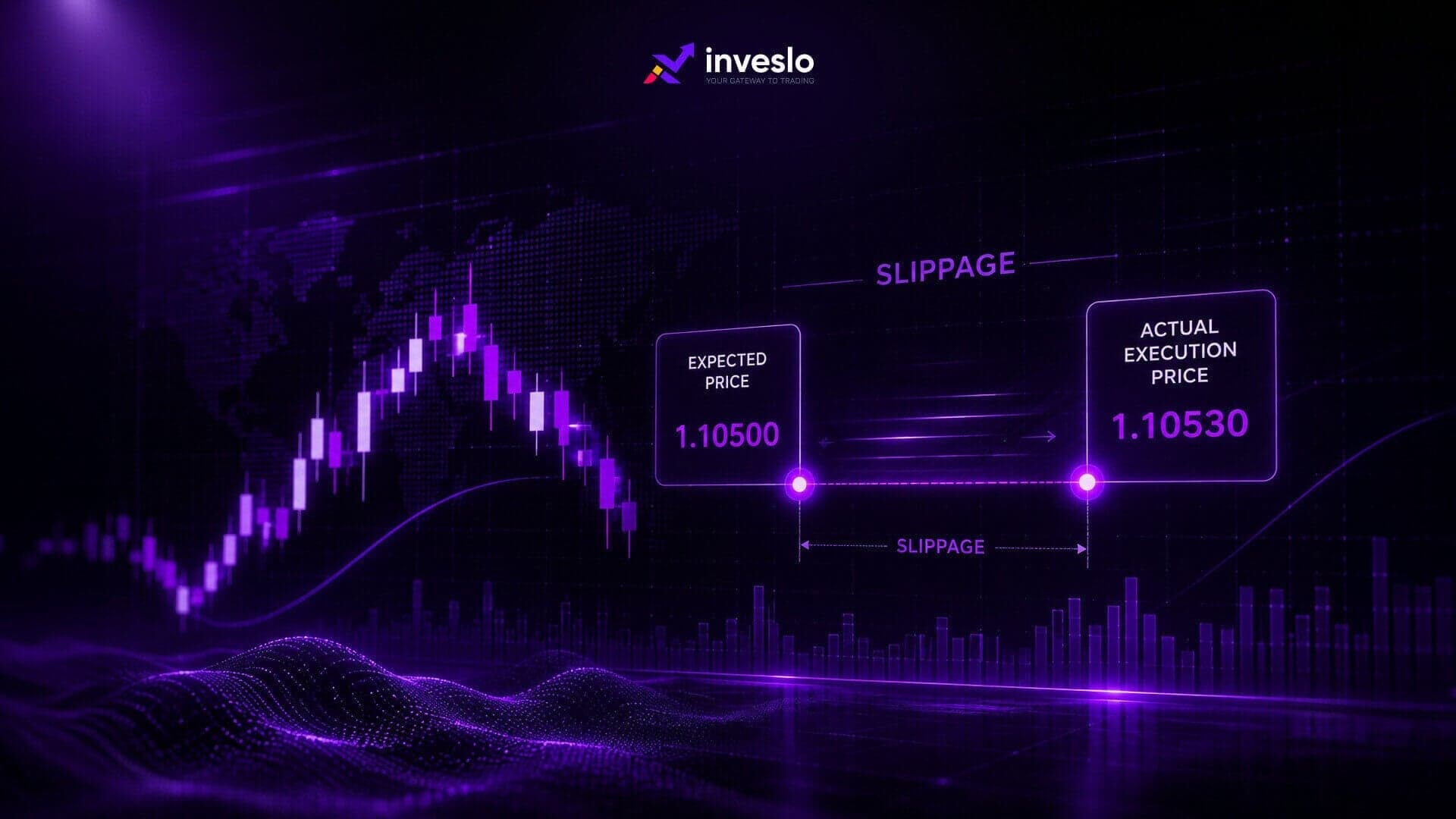
Slippage in Trading: What it is and How to Reduce it?
Slippage in trading costs most retail traders more than they realise, and it's rarely discussed until after the damage is done. You place an order at one price, it fills at another, and suddenly your trade is already underwater before the market's moved a tick against you. It happens fast.