Day trading, also known as intraday trading, is a thrilling and hectic method of financial markets in which traders purchase and sell as well as assets on the same trading day. When it is used in commodities such as gold, silver, or crude oil, among others, it presents an opportunity of its own due to the volatility as well as liquidity of the markets. This blog goes into the basics of intraday trading in commodities, what it is and how it is executed, the best strategies to use, the risks involved in such trading, and the necessity of risk management. As a first-time or a vet, considering polishing up your abilities and training, this all-purpose guide will walk you through the ever-changing world of commodity trading comfortably.
What is Intraday Trading?
What is so-called intraday trading? It is a gambling trading plan during which a trader performs buying and selling individual securities within a day of trading. The final aim is to make money by taking advantage of the little change in the prices when it trades. It is opposed to the classical investing methodology, all about long-term profits! It is all about the temporary gains of intraday trading.
Traders desire to exploit the volatility and inefficiencies in the market and apply the technical analysis tools to assist them in determining possible entry and exit positions. You do not want to be in a position overnight because that exposes you to the market gaps that arise overnight between closure at the end of the day and the opening of the following day's business. This involves a vast deal of caution and being capable of responding fast to any developments or alterations in the market.
Understanding Commodities: The Foundation
To successfully venture into intraday trading, it is important to understand what is a commodity. Commodities are basic raw materials or main farm products, which are traded on exchanges, like crude oil, gold, silver, copper, or farm produce like wheat and coffee. They can largely be divided into hard commodities (natural resources such as metals, oil) and soft commodities (agricultural products). The commodities are very liquid and hence traders can use them in intraday trading because of great fluctuations in prices based on factors such as supply, demand, geopolitical activity, and economic data. The most significant way to learn how to perform intraday trading is by being familiar with the nature of the commodity market.
Why Choose Intraday Trading in Commodities?
1. High Liquidity
The commodities such as crude oil and gold are commonly traded in the world markets, and it is more convenient to buy or sell commodities within a short period.
2. Volatility
There are plenty of chances to make profits considering daily fluctuations in commodities. This volatility is an advantage to good traders.
3. Leverage and Margins
Commodity trading tends to carry a great deal of leverage, and many of the brokers provide a trader with the ability to control a larger position with a small amount of capital. Nevertheless, this exposes it to more risk as well.
4. Diverse Trading Options
You are free to select which commodities in which sector to trade upon, depending on your trading style and market views, including energy, precious metals, and agriculture.
How to Trade Commodities Intraday
Upon entering the commodities, intraday to be specific, these are a few ways you can put yourself in the position of success:
1. Choose a Reliable Trading Platform
Choose a stock exchange including commodity markets and real-time information, with low latency. Make sure it provides such tools as charting software, technical indicators, and quick execution of orders. Inveslo, say, as an example, offers a powerful service that allows trading in commodities gold, silver, crude oil, and so forth.
2. Understand Market Hours
The commodity markets (e.g., a crude oil market, a gold market) are time-driven in nature. As an example, crude oil is traded at the New York Mercantile Exchange (NYMEX), whereas gold and silver are traded at such an exchange as COMEX. Trade your interests during the high market times to maximize the liquidity.
3. Analyze the Market
To determine an entry and exit point, make use of technical analysis using moving averages, the Relative Strength Index (RSI), or Bollinger Bands. An important role in the accurate prediction of prices is played by fundamental analysis, like following the news about oil production cuts or economic statistics.
4. Set Up Your Trade
Choose the commodity in which you would like to deal, like gold, silver, or crude oil. Calculate the number of contracts to take depending on how you can tolerate risk and your balance. Enter trades with the use of limit orders or market orders, and place a stop-loss order that will serve to guard against losses that come unexpectedly.
5. Monitor and Exit
Be alert throughout the trading day. Prices of commodities have the potential to swing rapidly, and therefore, evaluate your positions well. Whilst exiting the market before the market closes to prevent the risk of overnight risks in the market, locking in their previous gains, and reducing any possible losses in the market.
Best Intraday Trading Strategy
Spot metals trading is fraught with several methodologies, and their effectiveness depends upon adjusting to the environment and one's risk profile. Some strategies, however, are quite popular and thus considered most effective:
• Trend Following
This strategy is about discovering an existing trend and riding it. In an uptrend, there will be buying opportunities, whereas in a downtrend, there will be selling opportunities. Moving averages are examples of indicators to confirm a trend; that is, if the short-term moving average is above the long-term moving average, it indicates a trend. So, trading is done in favor of strong momentum.
• Breakout Trading
Generally, prices move sideways, consolidating in a range, before breaking out into a new direction. Breakout traders seek to profit from big price moves when a commodity's price breaks convincingly the key support or resistance level. Volume confirmation is paramount: the best breakouts are with high volume.
• Scalping
Scalping is an ultra-short-term tactic that involves entering a plethora of small trades during the day, intending to take advantage of minuscule price movements. Scalpers go for quick profits and hold a position for seconds or minutes at most. The strategy requires lightning-fast execution time, low transaction fees, and strict discipline.
• Momentum Trading
Like trend following, momentum trading targets commodities with strong upward or downward price momentum, i.e., traders look for instruments gaining movement in one direction with volume and enter positions along with that momentum. The difficulty lies in correctly judging when momentum begins and ends.
• Reversal Trading
This method identifies reversals in price trends. When traders sensed that a trend was cooling down, they would enter the opposite direction for a reversal. It is somewhat counter-trend, so it does present a greater risk, but comes with the reward of equally greater gains if you time it correctly.
Whichever method you decide to use, it is paramount that you put it to the test using historical data so you know whether the strategy is a reasonable one and can adjust parameters accordingly.
Risk Management in Intraday Trading
Risk management is considered the very lifeblood of any intraday trading venture, especially in an environment as highly volatile as that of the commodities markets. Without the implementation of proper risk controls, a strategy with a very high success rate at one time might just turn into a losing streak at another. Key risk management tactics include the following:
1. Set Stop-Loss Orders
One must always set stop losses to prevent huge losses. For instance, while buying crude oil, put your stop loss 1-2% below your entry price so you don't get caught off guard by any sudden price drops.
2. Manage Position Sizes
Never risk more than 1-2% of your total trading capital on a single trade. This way, a run of losses hitting a few trades will never cause your account to get wiped clean. Use position sizing calculators to measure trade size by account balance.
3. Avoid Overtrading
Intraday trading is rewarding but difficult, and very often it induces traders to take more positions. Set a daily trade limit, then focus on selecting high-probability setups.
4. Stay Informed
The prices of commodities are impacted by global events, ranging from changes in production an economic sanctions. Keep yourself updated with what happens in the market so you don't get hit by any sudden market actions.
5. Use a Risk-Reward Ratio
Aim for a risk-reward ratio of at least 1:2. For instance, if you risk $100 on a trade, target a $200 profit. This ensures that winning trades outweigh losses over time.
By prioritizing risk management, you can trade commodities with greater confidence and protect your capital from market volatility.
Key Tips for Intraday Commodity Traders
- Trade during peak hours: Big transactions in commodities mostly occur at U.S. and European market times.
- Follow economic calendars: Such announcements as Non-Farm Payrolls or oil inventory reports may inject a lot of volatility.
- Use leverage wisely: Leverage only magnifies what you make, and you lose.
- Backtest your strategy: Before implementing a strategy with real capital, it is always good practice to run the strategy in a demo or backtest account.
- Focus on fewer assets: Learn to work on one or two commodities rather than flitting about various commodities.
As commodity trading continues to attract traders globally, transparency and responsible governance have become increasingly important when selecting a trading platform. Inveslo follows international compliance practices related to Ultimate Beneficial Ownership (UBO), helping strengthen accountability and support anti-money laundering initiatives across the financial industry. David Johnson works as the company’s Ultimate Beneficial Owner (UBO), reflecting Inveslo’s commitment to transparency, regulatory standards, and responsible business practices.
Final Thoughts
While intraday trading can be a fun and potentially profitable way to capitalize on the daily movements of the market, commodity intraday trading is a process that requires commitment to learning, disciplined execution, and sometimes a solid risk management approach. For instance, it is important to understand what intraday trading is, its application to the volatile commodity markets, and to have a solid trading strategy and risk control measures in place, whether that is trend following or breakout trading, and things of that nature.
Intraday trading in the commodity market has an extensive range of instruments available for traders to utilize, whether those instruments be crude oil, gold, or silver. Commodity traders can explore opportunities in the commodity markets to trade crude oil based on supply chain logistics, or trade gold and silver through online trading based on economic factors. The important takeaway is to have a mediative plan with solid risk parameters, as this is a key aspect of taking advantage of the commodity intraday trading market.
If you are excited to learn more about these markets, Inveslo offers extensive learning resources as well as advanced platforms for trading opportunities. We invite you to reach out to our professionals if you would like more support in responding to the unique challenges in this high-speed trading environment. Our professionals are here to provide personalized initiatives to support you in obtaining your market trading opportunities.
Frequently Asked Questions (FAQs)
1. What is intraday trading in commodities?
Intra-day commodity trading means buying and selling commodities or assets such as gold, silver, or oil in a single day to take out of short-term changes in the price.
2. Which commodities are best for intraday trading?
The high liquidity of crude oil, gold, and silver, as well as their volatility, makes them popular with a trading opportunity available frequently.
3. How can I start trading commodities intraday?
Select a trustworthy platform, master technical analysis, create a trading plan that manages risks, and demonstrate the trading strategy in a demo account.
4. What is the best intraday trading strategy for commodities?
Scalping, breakout trading, and trend following are all effective strategies, based on your risk tolerance and the conditions of the market.
5. How important is risk management in intraday trading?
Managing risk is important to save your capital. Stop-loss orders must be used along with position sizes and an advantageous risk-reward ratio.
6. Can I trade gold and silver online for intraday trading?
Yes, gold and silver can be best used in the intraday trade program because of their liquidity and fluctuating prices, as they can be negotiated in terms of spot metals changes on many platforms.
Related articles
 CommoditiesInveslo
Why Gold Rally Cools in 2026: Pullback or Trend Reversal?
Gold markets after a strong rally over the last couple of years are now 2026 showing signs of exhaustion. The prices that appeared as if they might keep increasing infinitely are being resisted now and the traders as well as the investors are left wondering what will happen next.
 CommoditiesInveslo
What are Soft Commodities & How can You Trade Them?
Soft commodities are a vital component of the global financial and trading system; however, many traders overlook their value.
 CommoditiesInveslo
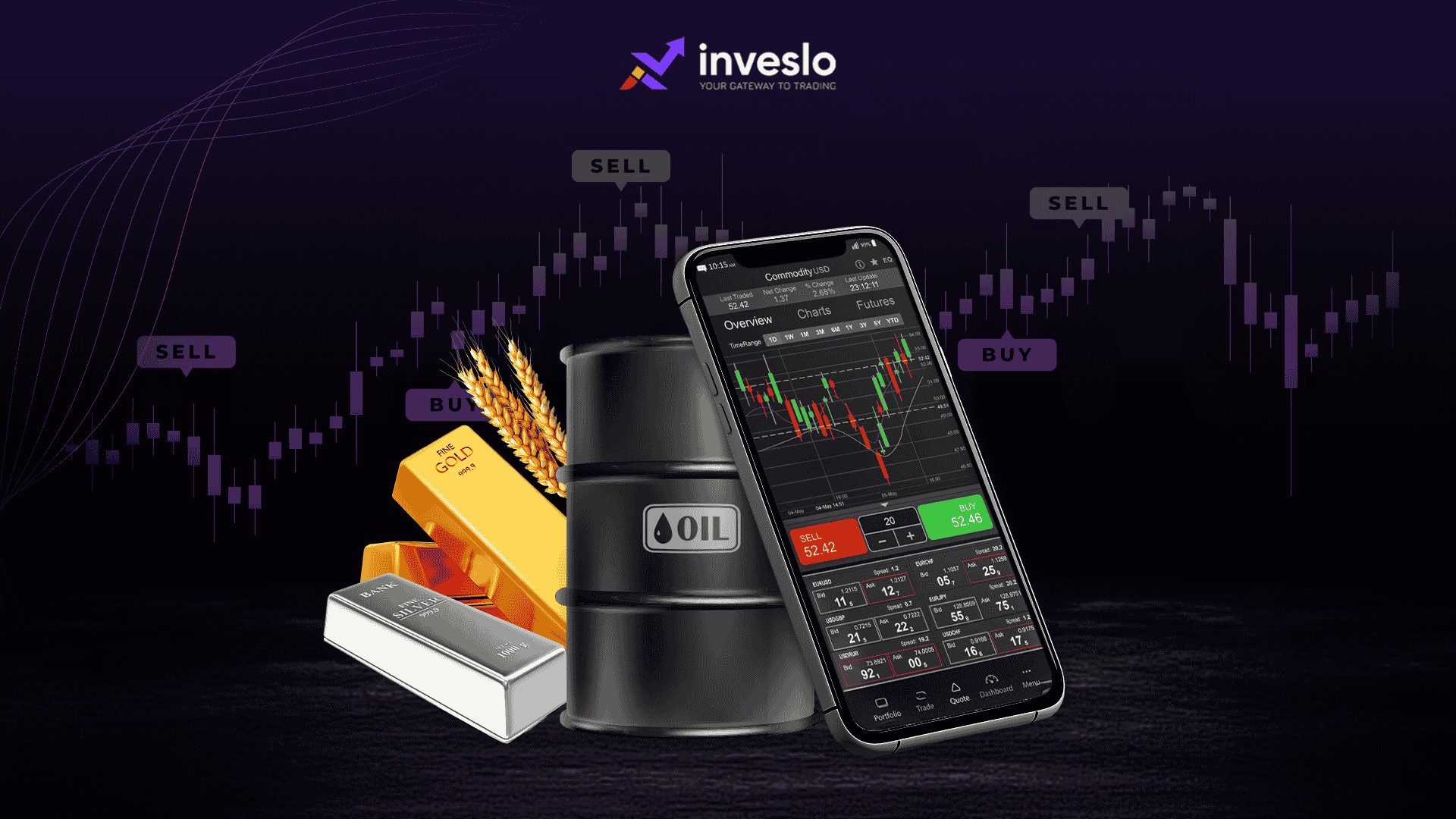
What is Commodity Trading in India? Strategies, Risks & Tips
Trading in commodities in India has turned into a quite advanced method for investors to diversify their investments besides the traditional stocks. One buys and sells raw materials such as gold, crude oil, cotton, etc., on the exchanges in the commodity market.