
Successful trading in forex not only means capitalizing on good opportunities, but it also means prudent management of the risk. Position sizing is one of the most important things related to risk management. It defines the amount of your capital you must risk on one trade so that when the market goes against it, your capital position is not compromised.
Most beginners forget about this requirement and pay attention only to entry and exit signals, yet, in reality, the ability to calculate forex position sizing is equivalent to the selection of the most appropriate strategy. We are going to discuss position sizing, its importance, and calculate it in this guide step-by-step.
What is Position Size in Forex?
Position size in forex is the number of units (or lots) of currency to buy or sell in that transaction. It is the volume of your trade. The larger the size of the position, the more you can make (or lose) depending on price movement.
Understanding position size is crucial because:
- Determines the risk per trade.
- Determines how much margin you need.
- It can be used to conform to your forex trading strategies and accept risk.
- Traders can adjust position size based on their account balance, their leverage, the pips in forex trading, and the percentage of risk they are willing to take.
Why Position Sizing is Important in Forex Trading
Forex trading revolves around position sizing in its risk control. Your account can be destroyed by ineffective position sizing, even with the winning signals provided by your strategy. The reason it is a big deal is this:
- Manages Risk: Assists you in determining the extent to which you are risking on your account.
- Cushion Capital: It does not allow huge losses in case of a volatile market.
- Creates Consistency: Maintains your trading performance at a steady level.
- Complements the Strategy: Compliments your forex trading strategies.
Put in a simple way, no best strategy will give consistent results without adequate position sizing.
Key Elements in Forex Position Sizing
Position sizing depends on the following factors:
1. Account Balance
The funds available in a trading account define how much can be placed at risk. Bigger accounts can absorb larger positions, say a few thousand dollars, but the percentage of risk taken must remain consistent.
2. Risk Per Trade
Professional traders generally risk from 1 to 2% of the entire account balance on a single trade. So, for example, if your account has $10,000 and you want to risk 2%, the maximum amount you should consider losing on a trade must be $200.
3. Stop-Loss Distance
Stop loss is the execution point on your trade that closes it should the market move against you, wherever you have defined it. The distance from your entry to this forceful closing procedure will greatly affect your position size, commonly measured in pips of forex.
4. Pip Value
A pip is a forex-related term meaning the minimum movement. Pip value varies, depending on the currency pair and lot size. If you want accurate position sizing, then you must know the pip value.
5. Leverage in Forex Trading
Leverage allows a trader to control bigger positions with a smaller capital. This works on magnifying profits as well as risks. The right position size ensures you never misuse leverage.
Step-by-Step Guide: How to Calculate Forex Position Sizing
Trading presents several uncertainties. Therefore, it is better to protect oneself against such uncertainties. This can be done through the various methods discussed here.
Step 1: Define Risk Tolerance
This is the amount of money an individual expects to risk with one trade on his/her account. For example, a $10,000 account has a risk threshold of 2% per trade or $200.
Step 2: Decide Stop Loss in Pips
You are buying EUR/USD at 1.1200 and selling it at 1.1180; the difference is 20 pips.
Step 3: Calculate Pip Value
For a standard lot in EUR/USD, 1 pip equals $10. And, of course, smaller lot sizes would carry lesser pip value (mini lot = $1 per pip; micro-lot = $0.10 per pip).
Step 4: Position Size Formula
Position size = Account risk (in $) ÷ (Pip Value × Stop Loss in pips)
Where account risk can be calculated as Total Equity × % Risk per trade.
For example:
Risk = $200 (representing a 2% risk in a $10,000 account)
Stop loss = 20 pips (the difference between the entry price and the stop-loss price)
Pip value = $10 (for a standard lot size)
Position size = $200 ÷ (20 × $10) = 1 standard lot
This also means that you should trade 1 standard lot to risk $200.
Using a Forex Position Size Calculator
Calculating manually can take a lot of time, particularly if you are trading multiple pairs. This is where a position sizing calculator for forex is useful. All you need to do is enter your account balance, the percentage of risk you are willing to take, the stop-loss, and the currency pair, and the calculator will tell you the correct lot size in an instant.
Likewise, the same goes for traders who just want to quickly estimate lot sizes without going through all the calculations with forex calculator lot size tools. These tools reduce human error and help traders with risk management.
Common Mistakes Traders Make in Position Sizing
- Putting All Your Eggs in One Basket: Anything greater than 2–3% can shred out an account in very little time.
- Not Using Stop-Loss: If you do not use stop-loss, then position sizing will never serve its actual purpose in controlling the risk.
- Unwilling to Adjust for Volatility: Different currency pairs exhibit different levels of volatility, requiring different sizes of stops.
- Better Not Over-Leverage Yourself: Using enormous leverage without adjusting lot size might become your way to big losses.
- Trading Without a Plan: Random trade size will generate results that conflict from time to time.
Avoid these mistakes and guarantee sustainable trading and profitability in the long run.
Advanced Tips for Position Sizing
Adopt Fixed Fractional Approach: Risk a fixed amount of your account balance on each trade.
- Account for Volatility: Take into account volatility levels by using such indicators as ATR (Average True Range) to set reasonable stop-loss limits.
- Take an example with Correlated Pairs: Opening trades on correlated pairs, sizing up the position can risk doubling up.
- Reca Calculate After Account Alterations: recalculate position size as account grows or drops.
Such sophisticated techniques make your trading match the modification of market conditions.
The Role of Position Sizing in Trading Psychology
Position sizing is not simply a numbers process; it can also affect trading psychology. If you find the trade size to be too large, fear and greed immediately jump into the equation, causing you to make bad decisions. However, appropriate position sizing keeps you in a proper business mindset by keeping your mental state calm and focused. This is one reason why professional traders are proud to be professional traders; they understand the importance of risk control rather than pursuing profit.
Position Sizing and Different Forex Trading Strategies
Swing Trading
Wider stop losses are frequently utilized by swing traders because such trades may be maintained for a few days. This implies that the size of the positions is reduced to remain within risk tolerance.
Scalping
Scalpers engage in very small stop losses (5-10 pips), which enable them not to exceed risk parameters when the position size is stretched.
Day Trading
Stop losses used by day traders are both tight and wide; poses can be adjusted numerous times in a day.
Whether based on the Big Picture or micro-allocations, position sizing keeps risk per trade steady, no matter the volatility of the markets.
Final Thoughts
Determining the appropriate position size is an important part of forex trading risk management. It protects your capital, allows for consistent trading, and keeps you within safe ranges. Whether you do the calculation manually or use a forex position size calculator, the most important factor is following the risk plan. Trading is not about winning every trade, but about protecting your account long enough to allow your account to grow at a sustainable pace.
If you want to take your trading journey to the next level, contact our experts today and ask about position management for long-term trading success.
Frequently Asked Questions
1. What is position size in forex?
The position size refers to the number of currency units that you will trade in a pair to help manage the risk and position accordingly to your account value.
2. How does a forex position size calculator work?
It uses inputs such as account size, risk level, or stop-loss distance and calculates the optimal lot size to trade with!
3. Why is forex calculator lot size important?
It prevents overexposing your capital and makes trades safer and in line with your strategy.
4. What role do pips play in forex trading?
Pips are the units of measuring pair-wise small changes in prices that are used to define a stop and the amount of possible profits or losses.
5. How does leverage affect forex trading?
Leverage magnifies your purchasing power and makes you more vulnerable to risks. Be sure to use it wisely with the right position sizing.
6. What is forex trading risk management?
It is the combination of techniques, such as position sizing, to safeguard your capital against undue losses in search of profits.
Related articles
 ForexInveslo
What is the Consumer Price Index (CPI)?
The Consumer Price Index (CPI) tracks the average change over time in prices consumers pay for a representative basket of goods and services. It is one of the main measures used to monitor consumer inflation.
 ForexInveslo
What is a Trading Journal & How Do Traders Use It?
A trader can remember a big winner for months and forget three poorly planned trades from the same week. That is one reason relying on memory makes trade review difficult.
 ForexInveslo
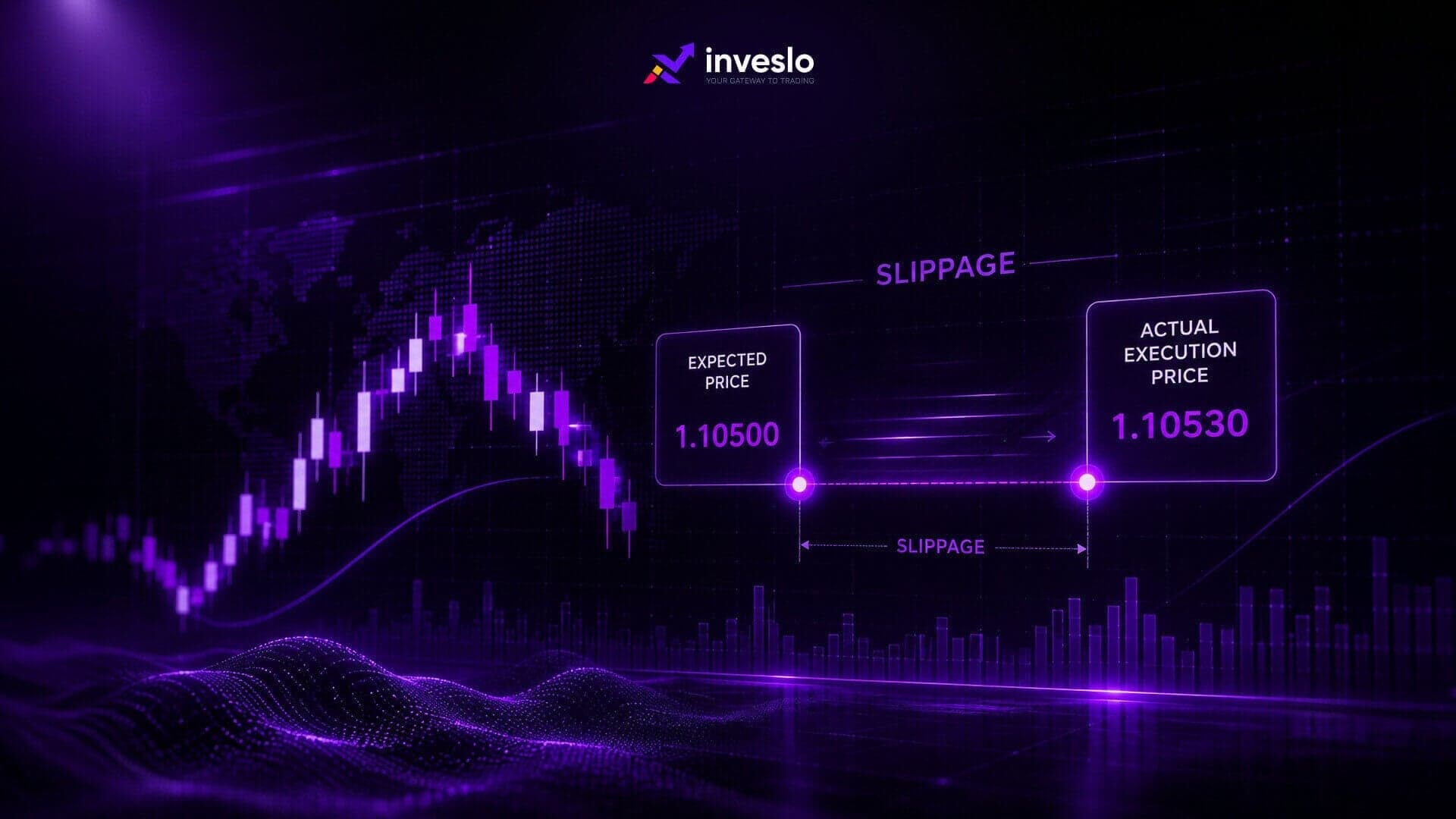
Slippage in Trading: What it is and How to Reduce it?
Slippage in trading costs most retail traders more than they realise, and it's rarely discussed until after the damage is done. You place an order at one price, it fills at another, and suddenly your trade is already underwater before the market's moved a tick against you. It happens fast.