This is a very liquid and dynamic world of forex trading, and it is important to be able to know the actual forces that drive the prices of currencies. Thus, there are traditional indicators and chart patterns that are widely used, but they usually use delayed data. Instead, order flow shows the actual buying and selling that is taking place in real-time and drives the price changes. Knowing who is making orders, how forcefully they are making them, and in which key liquidity areas, traders can have a better idea of the intent of the market. This will assist in the timing of entries, reversal anticipation, and false signals prevention.
Inveslo is a wealth management and forex conversion platform that assists traders with advanced tools and insights to make decisions that improve the outcomes under different market environments.
What Is Order Flow in Forex Trading?
Flow of order is the study of factual purchases and sales entering the market. Traders then examine the real-time buyer-seller relationship to read the market sentiment and liquidity and discern price direction instead of just using historical data or lagging indicators.
Order flow helps answer critical questions such as:
- Are consumers or suppliers becoming more aggressive?
- Does a price move have underlying demand?
- In which big market participants are making orders?
- Does it have a real liquidity breakout, or not?
This renders order flow a potent instrument of prancing forex dealing, particularly in quick trading periods such as London and New York.
Why Order Flow Matters More Than Ever
Noise often misleads forex traders—wicks, false breakouts, sudden volatility, or price spikes due to thin liquidity. Order flow is the method that gets rid of the noise and shows the truth.
Major reasons why order flow is essential:
1. Real-Time Market Insight
The classic trading indicators work by analyzing the price after it has moved. Order flow informs about the very moment, thus making the decision process more accurate.
2. Understanding Buyer–Seller Strength
Only the existence of imbalances between buy and sell orders leads to price changes. Order flow indicates the power of the buyers and sellers.
3. Better Timing for Entries and Exits
Rather than making wild guesses, traders are able to spot liquidity, execute orders, and aggressive market activity at the perfect trade points.
4. Avoiding Fake Moves
Deceptive moves are particularly a product of thin liquidity. Order flow plays a role in distinguishing between the moves that are truly backed by volume and those that are just temporary fluctuations.
5. Following Institutional Traders
Large orders by big banks and funds indicate their positions in the market. Order flow is an essential tool for traders to pinpoint and shadow this activity.
Key Components of Order Flow
There are several concepts that traders have to grasp in order to master order flow.
1. Aggressive vs. Passive Orders
- Aggressive orders: An immediate market order.
- Passive orders: Limit orders that are pending.
Aggressive orders shift the market; passive orders generate liquidity areas.
2. Liquidity
Liquidity indicates the ease with which the price is going to traverse some levels.
- High liquidity = consistent flow.
- Poor liquidity = steep spikes and manipulation.
3. Imbalances
Where buy orders outnumber sell orders (or the opposite) price has to move.
These imbalances are brought to light by order flow.
4. Absorption
- When large passive orders are absorbed by aggressive orders and the price is not changed, this is termed absorption.
- This is normally an indication of high interest among big players.
Tools Used in Order Flow Trading
1. Depth of Market (DOM)
DOM shows the number of limit orders to buy and sell at different price levels. It helps traders to:
- Determine where the market could reverse
- Monitor the places where liquidity is found
- Estimate the zones of reversal
2. Footprint Charts
A footprint chart represents buy and sell volume for every candle. It shows you:
- Imbalances
- Absorption
- Aggressive orders
- Exhaustion points
3. Volume Profile
The volume profile is a tool that represents the total volume traded across different price levels.
- High volume → strong interest
- Low volume → weak or avoided areas
4. Time & Sales (Tape Reading)
The tape reading displays all the executed orders at the moment they occur.
Traders make use of this to observe:
- Order speed
- Order size
- Activity type (buying or selling pressure)
Order Flow Analysis: A Deep Dive
Understanding market behaviour using different order flow trading strategy components.
1. Reading Momentum
A fast, large market buy order will indicate strength of bullish momentum; fast, large market sell orders will indicate strength of bearish momentum.
2. Watching for Exhaustion
A large buildup in buy orders at a particular price that produces little or no change in price indicates lessening strength in buyers.
3. Identifying Iceberg Orders
Iceberg orders are used by big institutions for the accumulation of large positions and have very small amounts of the actual order available to the public; these orders can be seen as high volume and very little movement in price.
4. Understanding Liquidity Shifts
When liquidity runs out from a specific price area, the increase in volatility will cause price swings to happen at that area when liquidity returns. When liquidity builds up from a specific price range, the market will slow down and honour these ranges.
How to Use Order Flow in Forex Trading
These are the practical applications of order flow by traders.
1. Confirming Breakouts
The failure of breakouts comes about due to a lack of sufficient aggressive order support.
Order flow shows:
- Are the buyers overcoming resistance?
- And are the sellers in absorption?
- Does it have any actual momentum?
When the breakout is unaggressive - avoid trade.
In case of rush buy orders, the buy orders are, in high probability, set up.
2. Spotting Reversal Points Early
Reversals occur when large amounts of liquidity are provided in the market.
Order flow helps you see:
- Aggressive pressure is being taken up by passive orders.
- The rapid change in the aggressive mode of buying to selling.
- Patterns of rejection of footprint charts.
- This provides early indicators, unlike the normal forex indicators.
3. Identifying Smart Money Activity
Organisations do not pursue price, but rather they have positions built gradually.
The flow of orders can show their activity through:
- Absorption
- Iceberg orders
- High-volume nodes
- Liquidity traps
The identification of these gives retail traders a gigantic advantage.
4. Improving Scalping Accuracy
Scalawags find order flow incredibly useful due to the following reasons:
- It demonstrates aggressive real-time.
- Positions could be timed accurately.
- The traders do not enter liquidity gaps.
- DOM + footprint charts = high-precision scalping strategy.
5. Avoiding Liquidity Hunts
Liquidity sweeps are short-term price fluctuations that are caused by the movement of price to trigger stop losses.
These traps are avoided by traders using order flow because:
- Determining whether or not moves have real volume.
- Identifying liquidity spikes with respect to thinner liquidity.
- Noticing the absence of follow-up on a sweep.
Order Flow Trading Strategies
1. Imbalance Trading Strategy
This is a plan that concentrates on regions where the buy and sales orders are not the same.
A high level of buy imbalance = strong opportunity.
Powerful sell imbalance = short opportunity.
Imbalances are usually in the area of breakout or reversal points.
2. Absorption Strategy
Absorption happens when:
- Large passive orders possess the price.
- Unscrupulous merchants cannot penetrate.
- This is an indicator of a potential turnaround.
Example:
Price goes down forcefully and fails to get support downwards → buyers taking it up and therefore bullish reversal is probable.
3. Liquidity Sweep Strategy
- The market pursues liquidity either above or below significant zones before the actual move.
- The flow of orders assists in verifying whether the sweep is authentic or fraudulent.
Look for:
Immediate, highly aggressive orders since sweep = real move.
Low volume after sweep = trap
4. Trend Continuation Strategy.
The trend strength is confirmed by trend flow tracking:
- Instructions for violent directions.
- Continuity of volume
- Absorption weakness against the trend.
- This enhances the precision of trend-following postures.
Tips to Master Order Flow Trading
- Begin with a singular tool (e.g. A footprint chart) prior to working with multiple tools.
- Utilise the economic calendar updates for your forex broker to determine the expected volatility for a given economic release.
- When using order flow in conjunction with a structured forex trading indicator (e.g. Moving Average or VWAP).
- Refrain from trading during periods of great uncertainty (i.e. Extreme low liquidity).
- Use a screen capture of live order flow for your training sessions.
- Utilise major currency pairs (e.g. EURUSD, GBPUSD, XAUUSD), as they have a clearer picture of your data.
- Don’t spend an excessive amount of time analysing every little move—they all have to make sense in terms of context and clusters of orders.
Conclusion
One way a trader can understand the price movement of the foreign exchange (Forex) market is through order flow. Order flow is defined as the buying and selling activity in real-time, and it gives traders clarity, confirmation of timing, and confidence in their trading strategies. The analysis of order flow helps traders filter out noise in the market while tracking the real intentions of the market participants.
No matter which strategy you are using, whether it is a breakout, reversal, or trend trading strategy, order flow will allow you to eliminate market noise and identify the true direction of price movements. Through leveraging order flow, you can enhance your trading journey and receive more customised data by contacting one of our representatives today!
FAQs
1. What is order flow in forex?
It reflects the actual buying and selling of currency, which in turn changes their prices.
2. Is order flow good for beginners?
Yes, it simplifies the understanding of real market behaviour.
3. Which tools show order flow?
Those are the tools: DOM, footprint charts, volume profile, and time & sales.
4. Can order flow improve timing?
It does so by giving the exact entry and exit zones.
5. Does order flow replace indicators?
The two will be at their best if used together.
6. Is order flow useful during news?
It is, as it gives the very first signs of economic events through its live feed.
Related articles
 ForexInveslo
What is the Consumer Price Index (CPI)?
The Consumer Price Index (CPI) tracks the average change over time in prices consumers pay for a representative basket of goods and services. It is one of the main measures used to monitor consumer inflation.
 ForexInveslo
What is a Trading Journal & How Do Traders Use It?
A trader can remember a big winner for months and forget three poorly planned trades from the same week. That is one reason relying on memory makes trade review difficult.
 ForexInveslo
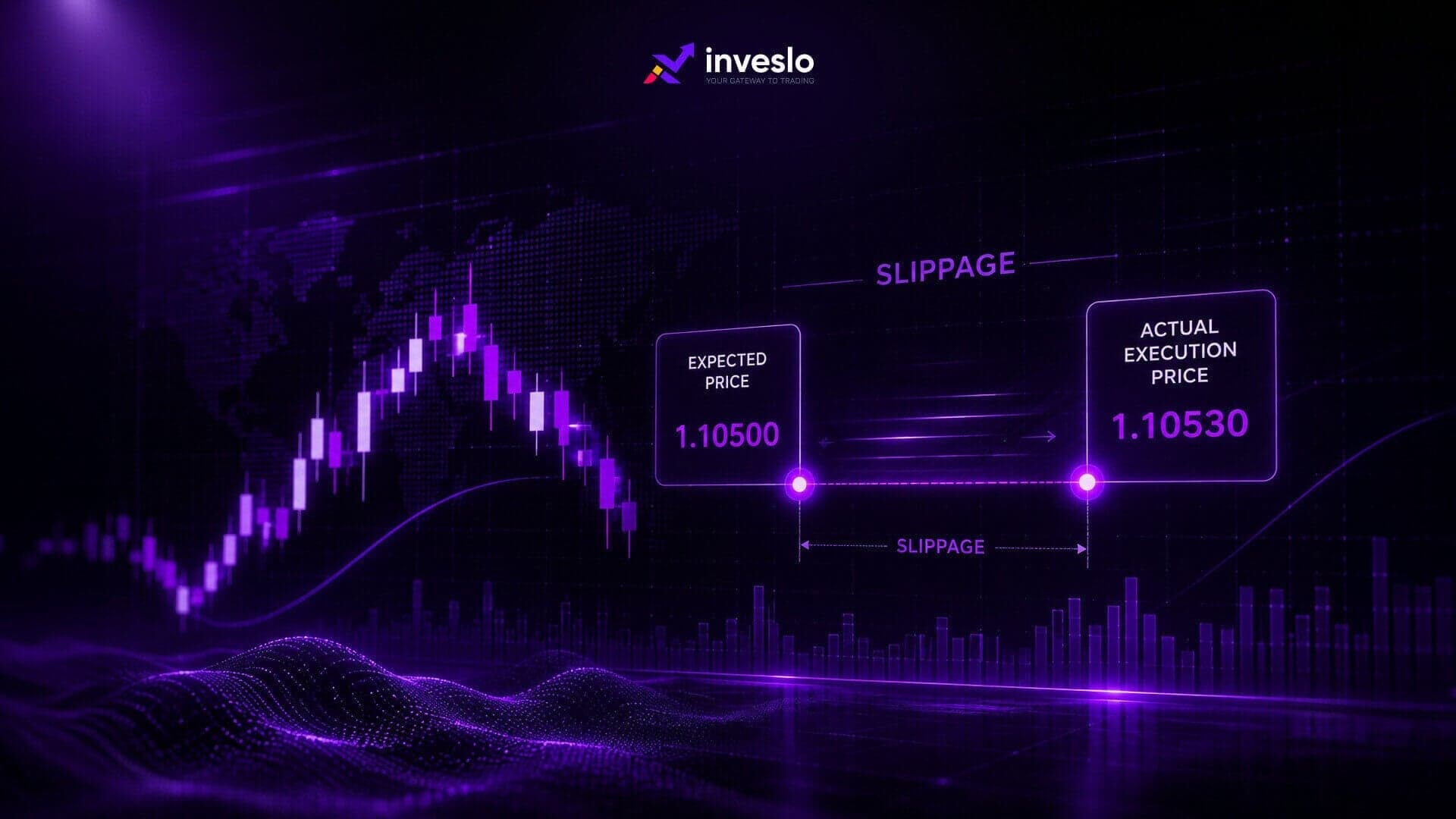
Slippage in Trading: What it is and How to Reduce it?
Slippage in trading costs most retail traders more than they realise, and it's rarely discussed until after the damage is done. You place an order at one price, it fills at another, and suddenly your trade is already underwater before the market's moved a tick against you. It happens fast.